 |
Latest | Greatest | Lobby | Journals | Search | Options | Help | Login |
|
 Printer-friendly format
 Email this thread to a friend
 Bookmark this thread
 |
This topic is archived. |
| Home » Discuss » Latest Breaking News |

|
ozymandius
 (1000+ posts)
Send PM |
Profile |
Ignore
(1000+ posts)
Send PM |
Profile |
Ignore
|
Mon Aug-27-07 05:22 AM Original message |
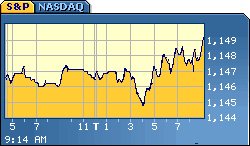
| STOCK MARKET WATCH, Monday August 27 |
| Printer Friendly | Permalink | | Top |
| ozymandius
(1000+ posts)
Send PM |
Profile |
Ignore
|
Mon Aug-27-07 05:24 AM Response to Original message |
| 1. Market WrapUp |
| Printer Friendly | Permalink | | Top |
| ozymandius
(1000+ posts)
Send PM |
Profile |
Ignore
|
Mon Aug-27-07 05:26 AM Response to Original message |
| 2. Today's Report |
| Printer Friendly | Permalink | | Top |
| mojavekid
(993 posts)
Send PM |
Profile |
Ignore
|
Mon Aug-27-07 11:06 AM Response to Reply #2 |
| 27. MW: Home inventories rise to 16-year high |
| Printer Friendly | Permalink | | Top |
| ozymandius
(1000+ posts)
Send PM |
Profile |
Ignore
|
Mon Aug-27-07 11:20 AM Response to Reply #27 |
| 31. Have we found another hack? |
| Printer Friendly | Permalink | | Top |
| 54anickel
(1000+ posts)
Send PM |
Profile |
Ignore
|
Mon Aug-27-07 12:06 PM Response to Reply #31 |
| 38. "Nonsense so blatant that only an intellectual would fall for it" |
| Printer Friendly | Permalink | | Top |
| ozymandius
(1000+ posts)
Send PM |
Profile |
Ignore
|
Mon Aug-27-07 11:34 AM Response to Reply #27 |
| 34. visual representation of market enthusiasm |
| Printer Friendly | Permalink | | Top |
| ozymandius
(1000+ posts)
Send PM |
Profile |
Ignore
|
Mon Aug-27-07 05:28 AM Response to Original message |
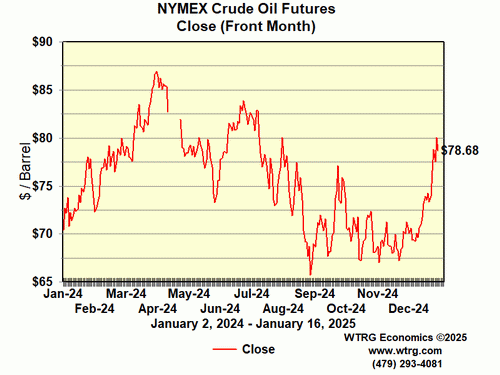
| 3. Oil prices slip to just above $71 |
| Printer Friendly | Permalink | | Top |
| ozymandius
(1000+ posts)
Send PM |
Profile |
Ignore
|
Mon Aug-27-07 05:30 AM Response to Reply #3 |
| 4. Gas down nearly 3 cents in 2 weeks |
| Printer Friendly | Permalink | | Top |
| ozymandius
(1000+ posts)
Send PM |
Profile |
Ignore
|
Mon Aug-27-07 05:32 AM Response to Original message |
| 5. Home Depot accepts $1.8B less for unit |
| Printer Friendly | Permalink | | Top |
| ozymandius
(1000+ posts)
Send PM |
Profile |
Ignore
|
Mon Aug-27-07 05:35 AM Response to Original message |
| 6. NABE: Bad credit biggest risk to economy |
| Printer Friendly | Permalink | | Top |
| ozymandius
(1000+ posts)
Send PM |
Profile |
Ignore
|
Mon Aug-27-07 05:37 AM Response to Original message |
| 7. Median price of homes seen falling: report |
| Printer Friendly | Permalink | | Top |
| ozymandius
(1000+ posts)
Send PM |
Profile |
Ignore
|
Mon Aug-27-07 05:43 AM Response to Original message |
| 8. Stricken German bank sold, Trichet awaited |
| Printer Friendly | Permalink | | Top |
| ozymandius
(1000+ posts)
Send PM |
Profile |
Ignore
|
Mon Aug-27-07 05:47 AM Response to Original message |
| 9. Dunkin' Donuts Dumping Most Trans Fats |
| Printer Friendly | Permalink | | Top |
| SpiralHawk
(1000+ posts)
Send PM |
Profile |
Ignore
|
Mon Aug-27-07 08:29 AM Response to Reply #9 |
| 16. URP ! |
| Printer Friendly | Permalink | | Top |
| ozymandius
(1000+ posts)
Send PM |
Profile |
Ignore
|
Mon Aug-27-07 05:54 AM Response to Original message |
| 10. I'm Baaaaack -- With New Home Sales (Bonddad on those screwy numbers) |
| Printer Friendly | Permalink | | Top |
| Kolesar
(1000+ posts)
Send PM |
Profile |
Ignore
|
Mon Aug-27-07 10:12 AM Response to Reply #10 |
| 22. Henny Penny! a 10% drop in home sales year-to-year |
| Printer Friendly | Permalink | | Top |
| UpInArms
(1000+ posts)
Send PM |
Profile |
Ignore
|
Mon Aug-27-07 07:03 AM Response to Original message |
| 11. dollar watch |
| Printer Friendly | Permalink | | Top |
| mojavekid
(993 posts)
Send PM |
Profile |
Ignore
|
Mon Aug-27-07 10:54 AM Response to Reply #11 |
| 25. Daily Pfennig 8/27/07: New Home Sales Soar? |
| Printer Friendly | Permalink | | Top |
| ozymandius
(1000+ posts)
Send PM |
Profile |
Ignore
|
Mon Aug-27-07 11:09 AM Response to Reply #25 |
| 28. Not even the most gullible believe Friday's new home sale report. |
| Printer Friendly | Permalink | | Top |
| mojavekid
(993 posts)
Send PM |
Profile |
Ignore
|
Mon Aug-27-07 11:36 AM Response to Reply #28 |
| 35. Hi Ozy, Right there with you, |
| Printer Friendly | Permalink | | Top |
| UpInArms
(1000+ posts)
Send PM |
Profile |
Ignore
|
Mon Aug-27-07 07:10 AM Response to Original message |
| 12. U.S. crisis underscores global links |
| Printer Friendly | Permalink | | Top |
| UpInArms
(1000+ posts)
Send PM |
Profile |
Ignore
|
Mon Aug-27-07 07:17 AM Response to Original message |
| 13. US recession risk highest since 9/11 -- ex-Treasury secretary |
| Printer Friendly | Permalink | | Top |
| UpInArms
(1000+ posts)
Send PM |
Profile |
Ignore
|
Mon Aug-27-07 07:22 AM Response to Original message |
| 14. Is There (Middle Class) Life After Maytag? |
| Printer Friendly | Permalink | | Top |
| UpInArms
(1000+ posts)
Send PM |
Profile |
Ignore
|
Mon Aug-27-07 07:25 AM Response to Original message |
| 15. Will the Fed Weigh In Again? |
| Printer Friendly | Permalink | | Top |
| Demeter
(1000+ posts)
Send PM |
Profile |
Ignore
|
Mon Aug-27-07 08:34 AM Response to Original message |
| 17. How Will Markets React to Gonzo Resignation? |
| Printer Friendly | Permalink | | Top |
| Nimrod2005
(1000+ posts)
Send PM |
Profile |
Ignore
|
Mon Aug-27-07 08:50 AM Response to Reply #17 |
| 18. Happy happy joy joy? |
| Printer Friendly | Permalink | | Top |
| Demeter
(1000+ posts)
Send PM |
Profile |
Ignore
|
Mon Aug-27-07 08:53 AM Response to Reply #18 |
| 19. Down 47? I Don't Think So |
| Printer Friendly | Permalink | | Top |
| Hugin
(1000+ posts)
Send PM |
Profile |
Ignore
|
Mon Aug-27-07 10:20 AM Response to Reply #17 |
| 23. Ah, he's just gone underground... |
| Printer Friendly | Permalink | | Top |
| antigop
(1000+ posts)
Send PM |
Profile |
Ignore
|
Mon Aug-27-07 09:36 AM Response to Original message |
| 20. Curb the greedy global financiers |
| Printer Friendly | Permalink | | Top |
| ozymandius
(1000+ posts)
Send PM |
Profile |
Ignore
|
Mon Aug-27-07 09:53 AM Response to Original message |
| 21. I think the Nasdaq volume is a bit off. |
| Printer Friendly | Permalink | | Top |
| Hugin
(1000+ posts)
Send PM |
Profile |
Ignore
|
Mon Aug-27-07 10:21 AM Response to Reply #21 |
| 24. Typo? |
| Printer Friendly | Permalink | | Top |
| mojavekid
(993 posts)
Send PM |
Profile |
Ignore
|
Mon Aug-27-07 10:57 AM Response to Original message |
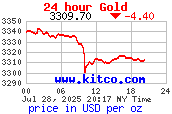
| 26. MW: Gold futures slip as dollar trades mixed |
| Printer Friendly | Permalink | | Top |
| mojavekid
(993 posts)
Send PM |
Profile |
Ignore
|
Mon Aug-27-07 11:10 AM Response to Original message |
| 29. Doug Noland Interview: "Deflating The Credit Bubble" on Financial Sense |
| Printer Friendly | Permalink | | Top |
| ozymandius
(1000+ posts)
Send PM |
Profile |
Ignore
|
Mon Aug-27-07 11:11 AM Response to Original message |
| 30. lunchtime check-in |
| Printer Friendly | Permalink | | Top |
| mojavekid
(993 posts)
Send PM |
Profile |
Ignore
|
Mon Aug-27-07 11:21 AM Response to Original message |
| 32. Bloomberg: Trichet Steps Back From Rate Signal, Says ECB Not Pre-Committed |
| Printer Friendly | Permalink | | Top |
| ozymandius
(1000+ posts)
Send PM |
Profile |
Ignore
|
Mon Aug-27-07 11:31 AM Response to Original message |
| 33. Market rallies at Lawrence Yun's prognosis. Dow +20 |
| Printer Friendly | Permalink | | Top |
| ozymandius
(1000+ posts)
Send PM |
Profile |
Ignore
|
Mon Aug-27-07 11:36 AM Response to Reply #33 |
| 36. updating blather |
| Printer Friendly | Permalink | | Top |
| 54anickel
(1000+ posts)
Send PM |
Profile |
Ignore
|
Mon Aug-27-07 11:54 AM Response to Original message |
| 37. Anyone catch this in GD-Politics. This sounds similar to the S&P put story floating here on Friday. |
| Printer Friendly | Permalink | | Top |
| 54anickel
(1000+ posts)
Send PM |
Profile |
Ignore
|
Mon Aug-27-07 12:20 PM Response to Original message |
| 39. Knowing What Ain't True (Hussman) |
| Printer Friendly | Permalink | | Top |
| mojavekid
(993 posts)
Send PM |
Profile |
Ignore
|
Mon Aug-27-07 12:42 PM Response to Original message |
| 40. Fleckenstein: How regulators fed the credit mess |
| Printer Friendly | Permalink | | Top |
| mojavekid
(993 posts)
Send PM |
Profile |
Ignore
|
Mon Aug-27-07 12:58 PM Response to Original message |
| 41. R.I.P. Aaron Russo, Music Manager, Film Producer Dies at 64 |
| Printer Friendly | Permalink | | Top |
| Kolesar
(1000+ posts)
Send PM |
Profile |
Ignore
|
Mon Aug-27-07 04:49 PM Response to Reply #41 |
| 43. That great film that started with Mozart and ended with doo-wop |
| Printer Friendly | Permalink | | Top |
| ozymandius
(1000+ posts)
Send PM |
Profile |
Ignore
|
Mon Aug-27-07 01:39 PM Response to Original message |
| 42. Markets rally on the renewed belief in the Tooth Fairy |
| Printer Friendly | Permalink | | Top |
| ozymandius
(1000+ posts)
Send PM |
Profile |
Ignore
|
Mon Aug-27-07 05:26 PM Response to Original message |
| 44. at the close - market trading volume at unbelievable heights |
| Printer Friendly | Permalink | | Top |
DU
AdBot (1000+ posts)     |
Sat Feb 14th 2026, 03:42 PM Response to Original message |
| Advertisements [?] |
| Top |
| Home » Discuss » Latest Breaking News |
|
Powered by DCForum+ Version 1.1 Copyright 1997-2002 DCScripts.com
Software has been extensively modified by the DU administrators
Important Notices: By participating on this discussion board, visitors agree to abide by the rules outlined on our Rules page. Messages posted on the Democratic Underground Discussion Forums are the opinions of the individuals who post them, and do not necessarily represent the opinions of Democratic Underground, LLC.
Home | Discussion Forums | Journals | Store | Donate
About DU | Contact Us | Privacy Policy
Got a message for Democratic Underground? Click here to send us a message.
© 2001 - 2011 Democratic Underground, LLC