Welcome to DU!
The truly grassroots left-of-center political community where regular people, not algorithms, drive the discussions and set the standards.
Join the community:
Create a free account
Support DU (and get rid of ads!):
Become a Star Member
Latest Breaking News
Editorials & Other Articles
General Discussion
The DU Lounge
All Forums
Issue Forums
Culture Forums
Alliance Forums
Region Forums
Support Forums
Help & Search
General Discussion
Related: Editorials & Other Articles, Issue Forums, Alliance Forums, Region Forums
Jennifer Rubin: The latest mass killing of civilians brings Israel to an inflection point
With condemnation growing after horrific deaths in Rafah, new pressure could push Netanyahu toward ending the war.https://www.washingtonpost.com/opinions/2024/05/30/rafah-israel-civilian-deaths-pressure-ceasefire/
https://archive.ph/883N7
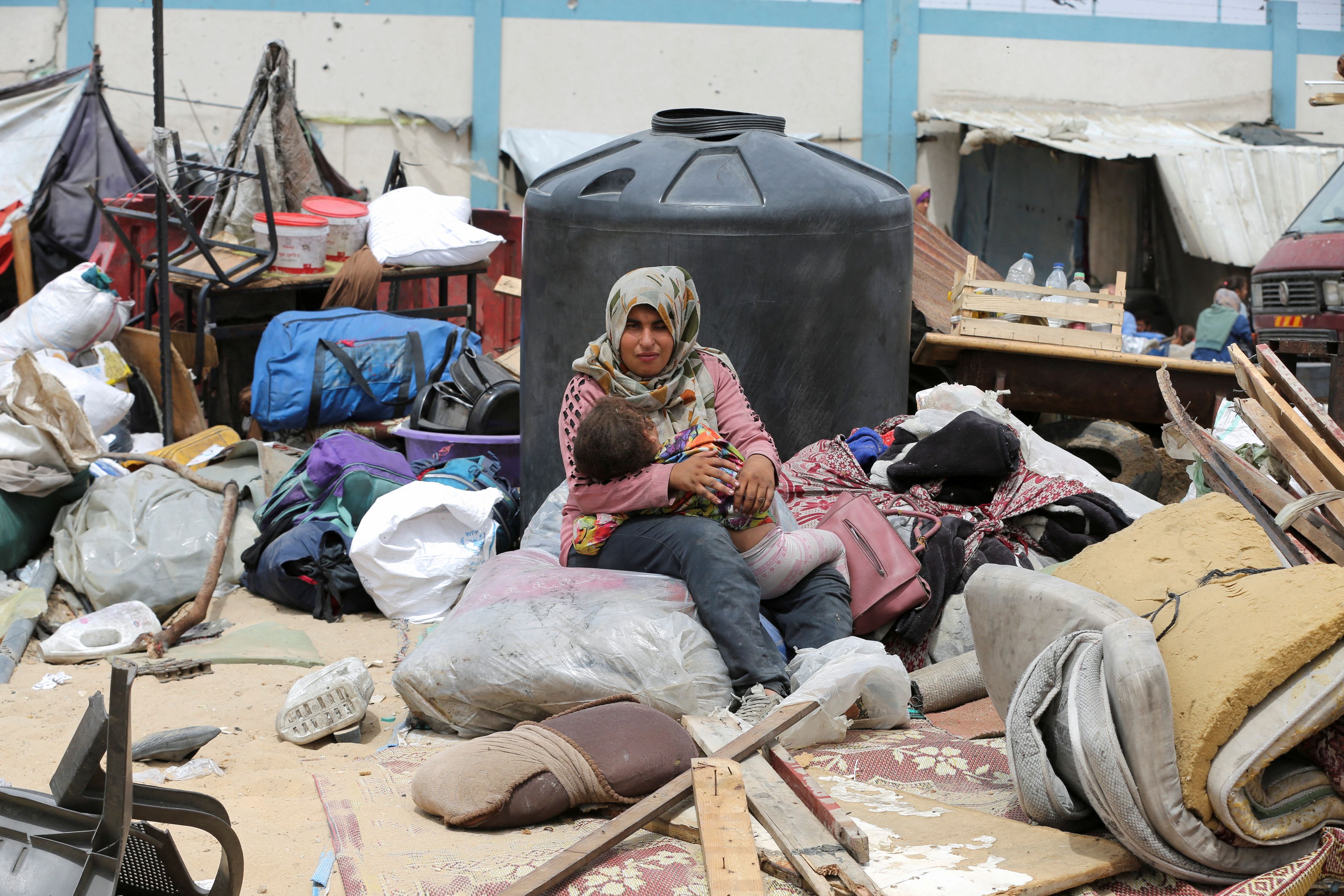
The latest mass casualty event in Gaza, the accidental killing of at least 45 civilians in a horrific fire set off by shelling, echoes the killing of seven World Central Kitchen aid workers last month. After that tragedy, fierce condemnation forced Israel to increase humanitarian aid and intensify efforts to “deconflict” (i.e., take measures to prevent accidental killings). Now, in the wake of the killing of 45 innocents, pressure on Israel mounts again. As a result, two starkly different possibilities emerge: another cycle of recrimination and Israeli defiance, fueled by Prime Minister Benjamin Netanyahu’s personal desperation to remain in power, or domestic and international pressure galvanizing to bring about a negotiated end to the ordeal. As unlikely as the latter may seem, there are precedents for it. “When a single Israeli action has resulted in a civilian death toll that the world cannot tolerate, it’s often become a tipping point in the course of conflict,” writes Dan Perry for the Forward. “Perhaps the most well-remembered such case was Israel’s [1996] shelling of Qana in Lebanon, which killed more than 100 displaced people. Outrage over the Qana massacre was so extreme that the strike ended up being one of the final actions in Israel’s (quite justifiable) ‘Grapes of Wrath’ operation against Hezbollah terrorists.”
With the investigation ongoing, the precise sequence of events is as yet unknown. “The Israeli military is investigating the possibility that munitions stored near a compound in Gaza hit by an air strike on Sunday may have caught fire, killing more than 40 civilians, a spokesperson said on Tuesday,” Reuters reported. “Chief military spokesperson Rear Admiral Daniel Hagari said it was still unclear what set off the deadly blaze in the southern Gaza city of Rafah, but added that the 17 kilogram munitions used in the strike were believed to be too small to have set off such a big fire.” Whatever the specifics of this incident, the deaths would not have occurred but for Israel’s incursion. Accordingly, the Israeli government finds itself the target of international condemnation. The government’s response did not help matters. As Israeli press reported, Netanyahu was silent for nearly 24 hours and then merely expressed regret over “a tragic mishap” and promised the Knesset he would investigate.
Meanwhile, the Associated Press reported, “Egypt’s military said one of its soldiers was shot dead during an exchange of fire in the Rafah area, without providing further details. Israel said it was in contact with Egyptian authorities, and both sides said they were investigating.” And both these deadly events came just days after the International Court of Justice (ICJ) issued a vaguely worded opinion that Israel must “immediately halt its military offensive, and any other action in the Rafah governorate, which may inflict on the Palestinian group in Gaza conditions of life that could bring about its physical destruction in whole or in part.” The ICJ ruling (to which Israel and the United States object strenuously), the Rafah deaths and the Egyptian exchange collectively intensify the impression of recklessness, disarray and arrogance in a military operation already facing criticism for lack of a viable strategic plan. After so many warnings about Israel’s obligation to minimize civilian casualties and, specifically, to forgo a full-scale invasion into densely populated Rafah (forcing nearly 1 million people to flee), the backlash to Netanyahu’s conduct of the war intensifies. Already, domestic opposition is coalescing.
Yair Lapid, the opposition leader and chairman of Yesh Atid, and Avigdor Liberman, the Yisrael Beytenu chairman, met with New Hope chairman Gideon Sa’ar on Wednesday “to discuss the formation of an alternative government,” the Jerusalem Post reported. “Sources in the opposition said the three parties are taking steps to overthrow the government and combine different parties to form a new government.” They are also planning to include war cabinet member Benny Gantz, who has vowed to leave the emergency cabinet and pull his centrist party out of Netanyahu’s coalition if there is no postwar plan by June 8. In sum, Netanyahu faces loud and harsh criticism from all sides: the international community, the Biden administration, members of the U.S. Congress, current and retired Israeli military officials, and mass protests that have become increasingly antagonistic toward him. Though the sources are different, the complaints (e.g., no strategic plan, not enough focus on the hostages, insufficient attention to mass civilian casualties, courting of international scorn, vile public comments that engender international legal action) are largely the same. The criticism has intensified in the aftermath of the latest civilian disaster and might help shift momentum in favor of a cease-fire.
snip