Welcome to DU!
The truly grassroots left-of-center political community where regular people, not algorithms, drive the discussions and set the standards.
Join the community:
Create a free account
Support DU (and get rid of ads!):
Become a Star Member
Latest Breaking News
Editorials & Other Articles
General Discussion
The DU Lounge
All Forums
Issue Forums
Culture Forums
Alliance Forums
Region Forums
Support Forums
Help & Search
General Discussion
Related: Editorials & Other Articles, Issue Forums, Alliance Forums, Region Forums
Globalization left millions behind as a policy and transformed the world politically, a new book argues.

https://prospect.org/culture/books/2025-10-03-americas-greatest-mistake-globalization-lynch-review/

For a time, globalization was synonymous with utopia: the untrammeled flow of capital across borders, new markets waiting to be opened, the growth of developing nations flaunting their comparative advantage in manufacturing jobs. If you covered the chaotic end of Suharto’s rule in Indonesia, the ruble crisis in Russia, China’s integration into global markets, and the plight of abandoned American workers, however, you may be convinced globalization is the single-best explanation for the economic upheaval and political polarization of our current age.
This is where David J. Lynch, a longtime global economics reporter for The Washington Post, has landed. For years, he has covered every major trade agreement and its impact on workers around the world. In The World’s Worst Bet: How the Globalization Gamble Went Wrong (And What Would Make It Right), he delivers a new history of the euphoric rise and eventual backlash of this era of the connected world.
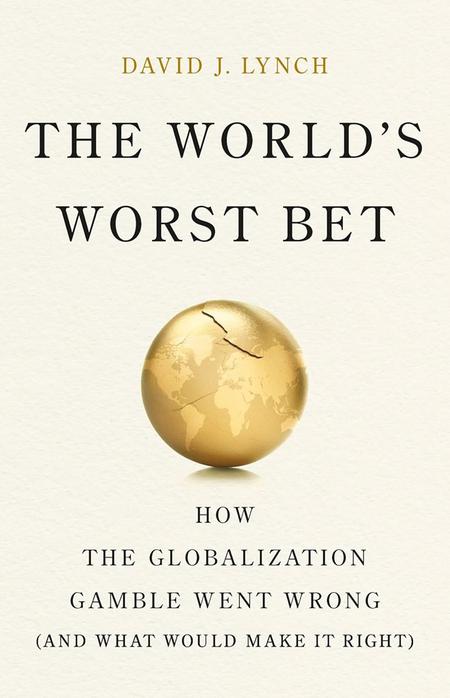
Living through the past decades, you may feel like you know the story all too well. But by focusing on the tension between capital and labor, he brings fresh insight to the weighty decisions and missteps that brought us from the heady days of neoliberalism to the full-on return of a nationalist world order.
Lynch structures the book as a narrative autopsy of each presidential administration’s respective failures to shield the American worker from globalization’s most backbreaking consequences. Anchored in exhaustive reporting and dozens of interviews with those who built or challenged the system, it is a Greek tragedy of messianic, world-shaking hubris, starring an elite class of politicians whose betrayal of working-class Americans helped trigger a populist surge that has engulfed the world.
snip
1 replies
 = new reply since forum marked as read
Highlight:
NoneDon't highlight anything
5 newestHighlight 5 most recent replies
= new reply since forum marked as read
Highlight:
NoneDon't highlight anything
5 newestHighlight 5 most recent replies
= new reply since forum marked as read
Highlight:
NoneDon't highlight anything
5 newestHighlight 5 most recent replies
Globalization left millions behind as a policy and transformed the world politically, a new book argues. (Original Post)
Celerity
Oct 2025
OP

UpInArms
(54,129 posts)1. Sounds like the sum of the book is weak tea
Yet these individuals and communities are largely absent from his book. So too is any extended discussion of trade’s disparate impact on different ethnic groups, much less between genders. Lynch’s policy prescriptions also feel unsatisfying: He recommends rebuilding our tattered social safety net via higher corporate tax rates and a renewed commitment to ending tax avoidance. For Lynch, proposing policies seems less important than forcing a reckoning with a world of borderless capital, an all-powerful China, and populist tumult.
Inevitably, Lynch’s book leads him back to Bill Clinton, the man who started it all. While he accepts that globalization hasn’t worked out the way he’d hoped, he regards the backlash as a combination of economic, social, and cultural factors. In his mind, there’s still time to find a new script for globalization, and this time, to do right by the American worker. “The obligation of the government is to minimize loss and find people something else to do so we can keep growing.”
Inevitably, Lynch’s book leads him back to Bill Clinton, the man who started it all. While he accepts that globalization hasn’t worked out the way he’d hoped, he regards the backlash as a combination of economic, social, and cultural factors. In his mind, there’s still time to find a new script for globalization, and this time, to do right by the American worker. “The obligation of the government is to minimize loss and find people something else to do so we can keep growing.”