Welcome to DU!
The truly grassroots left-of-center political community where regular people, not algorithms, drive the discussions and set the standards.
Join the community:
Create a free account
Support DU (and get rid of ads!):
Become a Star Member
Latest Breaking News
Editorials & Other Articles
General Discussion
The DU Lounge
All Forums
Issue Forums
Culture Forums
Alliance Forums
Region Forums
Support Forums
Help & Search
General Discussion
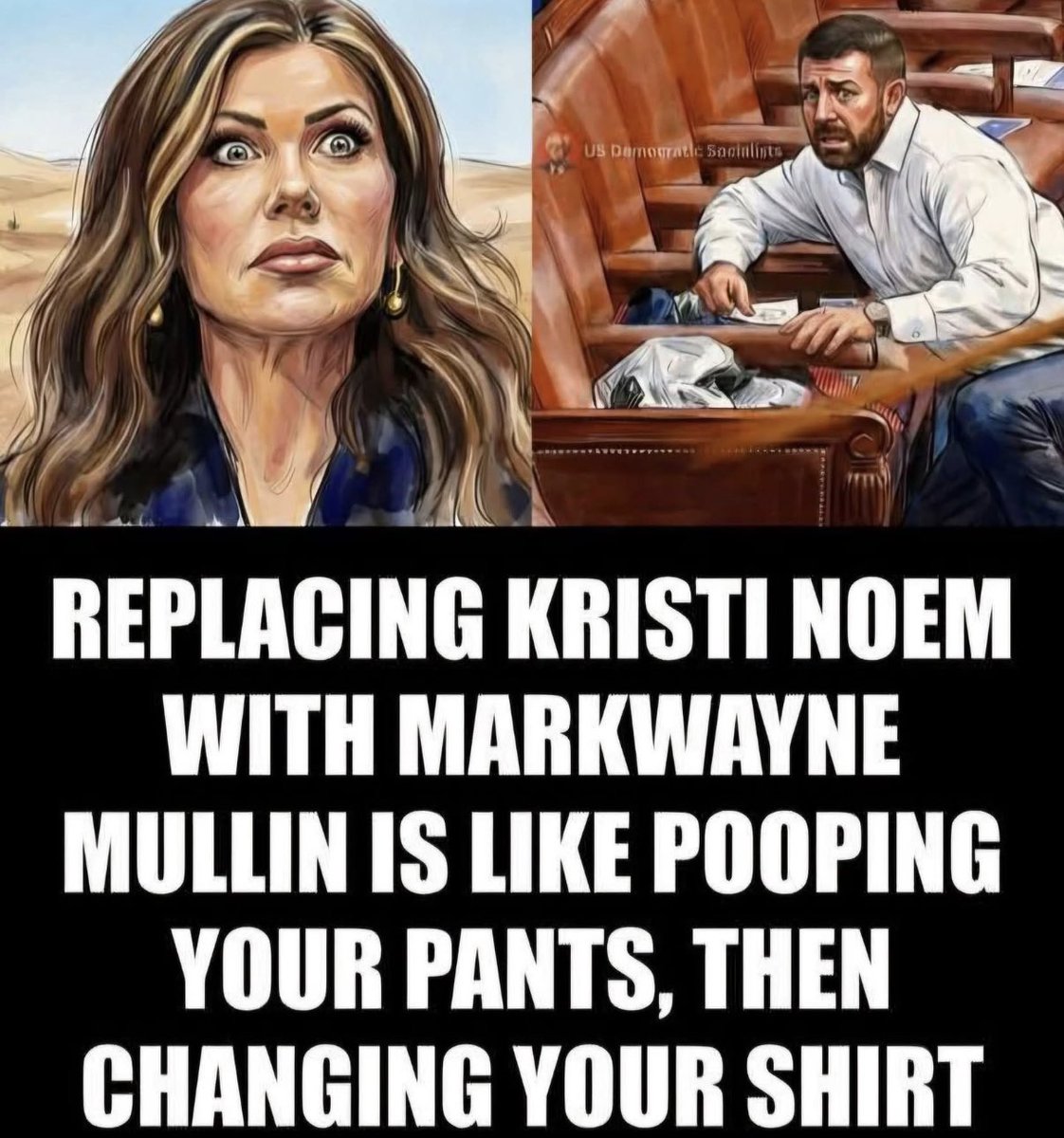
Related: Editorials & Other Articles, Issue Forums, Alliance Forums, Region ForumsMullin is the guy that almost got in a brawl with the Teamsters president.
Oh man...Seems like he has some issues.
11 replies
 = new reply since forum marked as read
Highlight:
NoneDon't highlight anything
5 newestHighlight 5 most recent replies
= new reply since forum marked as read
Highlight:
NoneDon't highlight anything
5 newestHighlight 5 most recent replies
= new reply since forum marked as read
Highlight:
NoneDon't highlight anything
5 newestHighlight 5 most recent replies
Mullin is the guy that almost got in a brawl with the Teamsters president. (Original Post)
LuckyCharms
Thursday
OP

Harker
(17,698 posts)1. Assholes, like cream, rise to the top.

Walleye
(44,466 posts)2. I saw that when it happened, it was embarrassing. Glad Bernie stepped in

dalton99a
(93,599 posts)3. Mullin is definitely qualified to beat up immigrants.


City Lights
(25,658 posts)4. Mullet is a two-bit thug. nt

flashman13
(2,303 posts)5. That's nothing. Lil Timmy Sheehy broke a Marine's arm yesterday.
erronis
(23,517 posts)6. Shades of McCarthy. We can hope he ends his days like McCarthy.
https://en.wikipedia.org/wiki/Joseph_McCarthy

Final years
Harry J. Anslinger criticized but supplied McCarthy's morphine addiction.
After his condemnation and censure, McCarthy continued to perform his senatorial duties for another two and a half years. His career as a major public figure, however, had been ruined. His colleagues in the Senate avoided him; his speeches on the Senate floor were delivered to a near-empty chamber or received with intentional and conspicuous displays of inattention.[165]
The press that had once recorded his every public statement now ignored him, and outside speaking engagements dwindled almost to nothing. Eisenhower, finally freed of McCarthy's political intimidation, quipped to his Cabinet that McCarthyism was now "McCarthywasm".[166]
Still, McCarthy continued to rail against communism and socialism. He warned against attendance at summit conferences with "the Reds", saying that "you cannot offer friendship to tyrants and murderers ... without advancing the cause of tyranny and murder."[167]
He declared that "co-existence with Communists is neither possible nor honorable nor desirable. Our long-term objective must be the eradication of Communism from the face of the earth." In one of his final acts in the Senate, McCarthy opposed President Eisenhower's nomination to the Supreme Court of William J. Brennan, after reading a speech Brennan had given shortly beforehand in which he characterized McCarthy's anti-Communist investigations as "witch hunts". McCarthy's opposition failed to gain any traction, however, and he was the only senator to vote against Brennan's confirmation.[168]
McCarthy's biographers agree that he was a changed man, for the worse, after the censure; declining both physically and emotionally, he became a "pale ghost of his former self", in the words of Fred J. Cook.[169]
It was reported that McCarthy suffered from cirrhosis of the liver and was frequently hospitalized for alcohol abuse. Numerous eyewitnesses, including Senate aide George Reedy and journalist Tom Wicker, reported finding him drunk in the Senate.
Journalist Richard Rovere (1959) wrote:
He had always been a heavy drinker, and there were times in those seasons of discontent when he drank more than ever. But he was not always drunk. He went on the wagon (for him this meant beer instead of whiskey) for days and weeks at a time. The difficulty toward the end was that he couldn't hold the stuff. He went to pieces on his second or third drink, and he did not snap back quickly.[170]
McCarthy had also become addicted to morphine. Harry J. Anslinger, head of the Federal Bureau of Narcotics, became aware of McCarthy's addiction in the 1950s, and demanded he stop using the drug. McCarthy refused.[171] In Anslinger's memoir, The Murderers (1961), McCarthy is anonymously quoted as saying:
I wouldn't try to do anything about it, Commissioner ... It will be the worse for you ... and if it winds up in a public scandal and that should hurt this country, I wouldn't care [...] The choice is yours.[171]
Anslinger decided to give McCarthy access to morphine in secret from a pharmacy in Washington, D.C. The morphine was paid for by the Federal Bureau of Narcotics, right up to McCarthy's death. Anslinger never publicly named McCarthy, and he threatened with prison a journalist who had uncovered the story.[171] However, McCarthy's identity was known to Anslinger's agents, and journalist Maxine Cheshire confirmed his identity with Will Oursler, co-author of The Murderers, in 1978.[171][172]
Harry J. Anslinger criticized but supplied McCarthy's morphine addiction.
After his condemnation and censure, McCarthy continued to perform his senatorial duties for another two and a half years. His career as a major public figure, however, had been ruined. His colleagues in the Senate avoided him; his speeches on the Senate floor were delivered to a near-empty chamber or received with intentional and conspicuous displays of inattention.[165]
The press that had once recorded his every public statement now ignored him, and outside speaking engagements dwindled almost to nothing. Eisenhower, finally freed of McCarthy's political intimidation, quipped to his Cabinet that McCarthyism was now "McCarthywasm".[166]
Still, McCarthy continued to rail against communism and socialism. He warned against attendance at summit conferences with "the Reds", saying that "you cannot offer friendship to tyrants and murderers ... without advancing the cause of tyranny and murder."[167]
He declared that "co-existence with Communists is neither possible nor honorable nor desirable. Our long-term objective must be the eradication of Communism from the face of the earth." In one of his final acts in the Senate, McCarthy opposed President Eisenhower's nomination to the Supreme Court of William J. Brennan, after reading a speech Brennan had given shortly beforehand in which he characterized McCarthy's anti-Communist investigations as "witch hunts". McCarthy's opposition failed to gain any traction, however, and he was the only senator to vote against Brennan's confirmation.[168]
McCarthy's biographers agree that he was a changed man, for the worse, after the censure; declining both physically and emotionally, he became a "pale ghost of his former self", in the words of Fred J. Cook.[169]
It was reported that McCarthy suffered from cirrhosis of the liver and was frequently hospitalized for alcohol abuse. Numerous eyewitnesses, including Senate aide George Reedy and journalist Tom Wicker, reported finding him drunk in the Senate.
Journalist Richard Rovere (1959) wrote:
He had always been a heavy drinker, and there were times in those seasons of discontent when he drank more than ever. But he was not always drunk. He went on the wagon (for him this meant beer instead of whiskey) for days and weeks at a time. The difficulty toward the end was that he couldn't hold the stuff. He went to pieces on his second or third drink, and he did not snap back quickly.[170]
McCarthy had also become addicted to morphine. Harry J. Anslinger, head of the Federal Bureau of Narcotics, became aware of McCarthy's addiction in the 1950s, and demanded he stop using the drug. McCarthy refused.[171] In Anslinger's memoir, The Murderers (1961), McCarthy is anonymously quoted as saying:
I wouldn't try to do anything about it, Commissioner ... It will be the worse for you ... and if it winds up in a public scandal and that should hurt this country, I wouldn't care [...] The choice is yours.[171]
Anslinger decided to give McCarthy access to morphine in secret from a pharmacy in Washington, D.C. The morphine was paid for by the Federal Bureau of Narcotics, right up to McCarthy's death. Anslinger never publicly named McCarthy, and he threatened with prison a journalist who had uncovered the story.[171] However, McCarthy's identity was known to Anslinger's agents, and journalist Maxine Cheshire confirmed his identity with Will Oursler, co-author of The Murderers, in 1978.[171][172]

Wednesdays
(22,354 posts)7. He was quite a work.
But if he were reincarnated today, he'd be the Heir Apparent after The Felon exited.

On edit: McCarthy's association with Roy Cohn is eerie. Guess the apple doesn't fall far from the tree.
paleotn
(22,032 posts)8. Dumb f'ing r__neck.
Fight the Teamsters president? That's a good way to find yourself disappeared. 


Tim S
(191 posts)9. I wonder how many people turned down the nomination before Mullin accepted it?
Who in their right mind would want to take on the responsibility of running DHS??
I have to assume Mullin wasn’t the first choice, he was just the first “yes”.
LetMyPeopleVote
(178,495 posts)10. This made me smile
LetMyPeopleVote
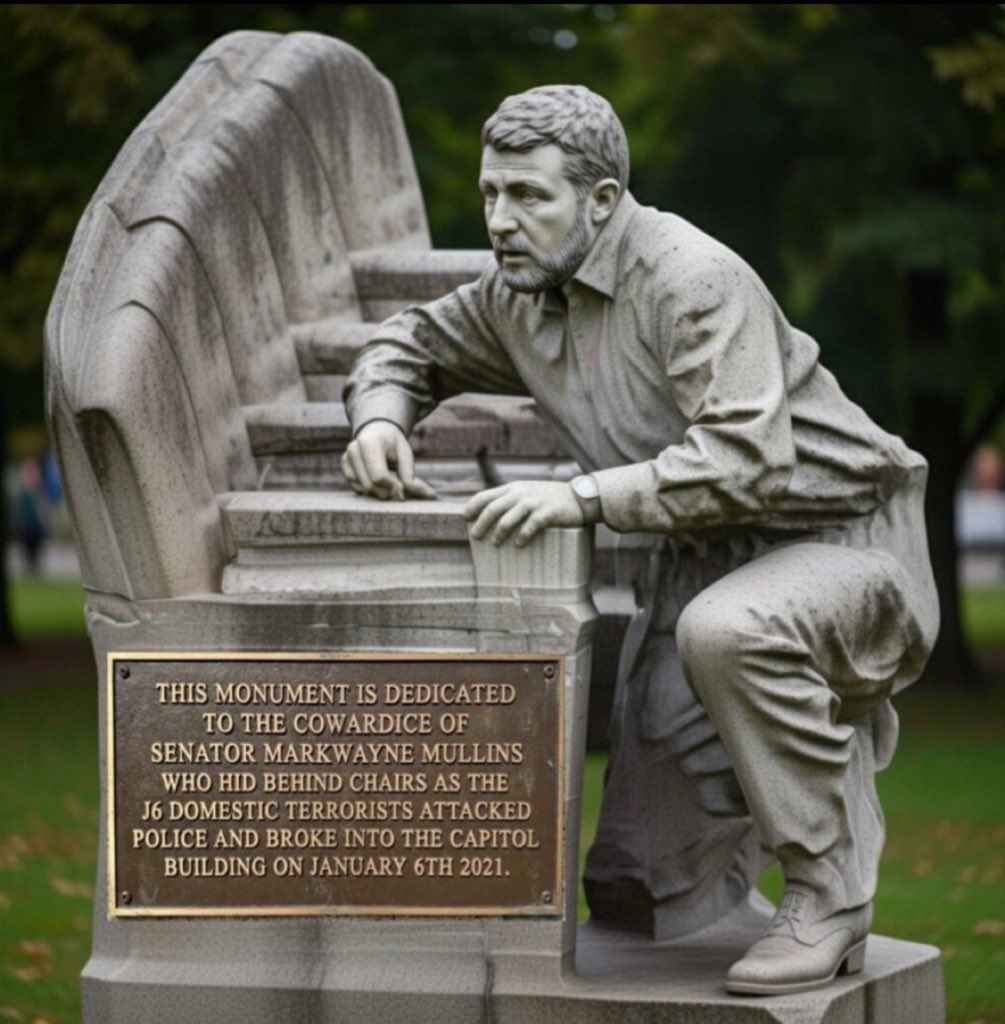
(178,495 posts)11. Something else that made me smile