Environment & Energy
Related: About this forumUnlocking the "Nuclear Energy Code" of the Ocean: Tech for Capture of Uranium from Seawater.
The paper I'll discuss in this post is this one:
Unlocking the “Nuclear Energy Code” of the Ocean: A Review of Technologies for Uranium Recovery from Seawater Wenlian Chen, Xianjin Lin, Denglong Lu, Liyang Yu, Li Gao, and Bingxin Liu Industrial & Engineering Chemistry Research 2026 65 (19), 10112-10134.
If one looks, there are many different periodic tables published around the issue of "critical materials," elements whose future availability is regarded as threatened by complete exhaustion of their recoverable reserves. There are a large number of papers, monographs, and government reports published around considerations of the issue. They're not all entirely consistent, but they all raise an often-ignored problem, particularly with respect to energy, since all energy systems require material, albeit some more than others.
I've been thinking myself a lot about this issue on and off, and recently I wrote about this in this space referencing some Chinese scientists ruminating on the long term availability of copper in their country: Is there enough copper on Earth for China's so called "Energy Transition?" An antinuke piped in with some charts and graphs in denial, but one shouldn't take this sort of bourgeois cornucopian mentality too seriously, that is, at least, if one has some level of an ethical purview.
Anyway...
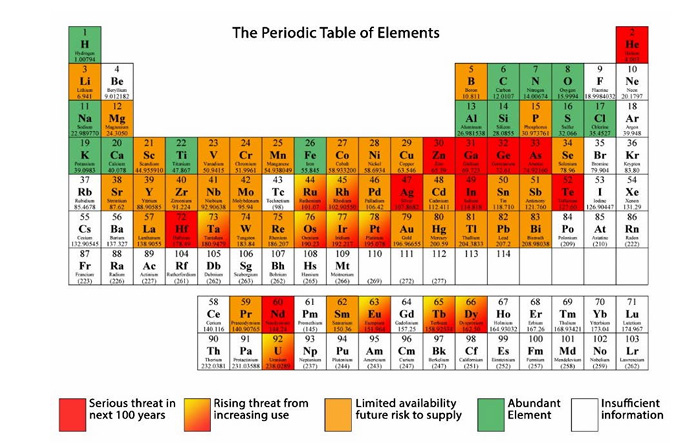
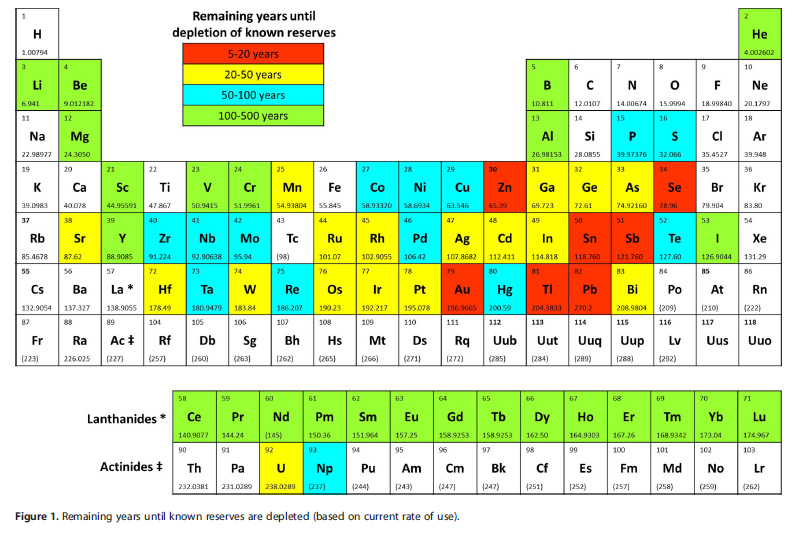
Here are some of the aforementioned periodic tables one sees in "critical elements" literature from the roughly 100 files in my computer's directory on the subject:
Michaux Report number: 16/2021, Mining and Minerals, Geological Survey of Finland, 2021.
Emma Davies, Endangered Elements: Critical Thinking, Chemistry World 2011
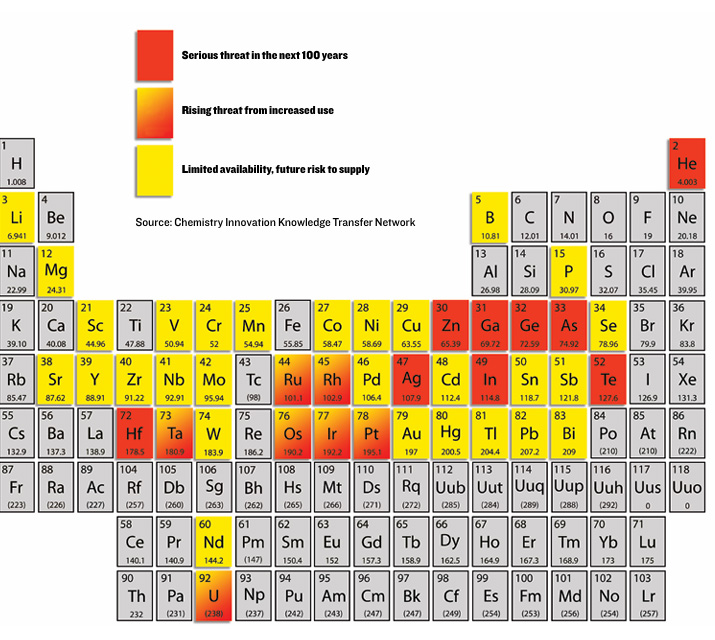
Supanchaiyamat, Nontipa, Hunt, Andrew J. , Conservation of Critical Elements of the Periodic Table, ChemSusChem, 12, 2, 397- 403 (2019)
An offering from the American Chemical Society:
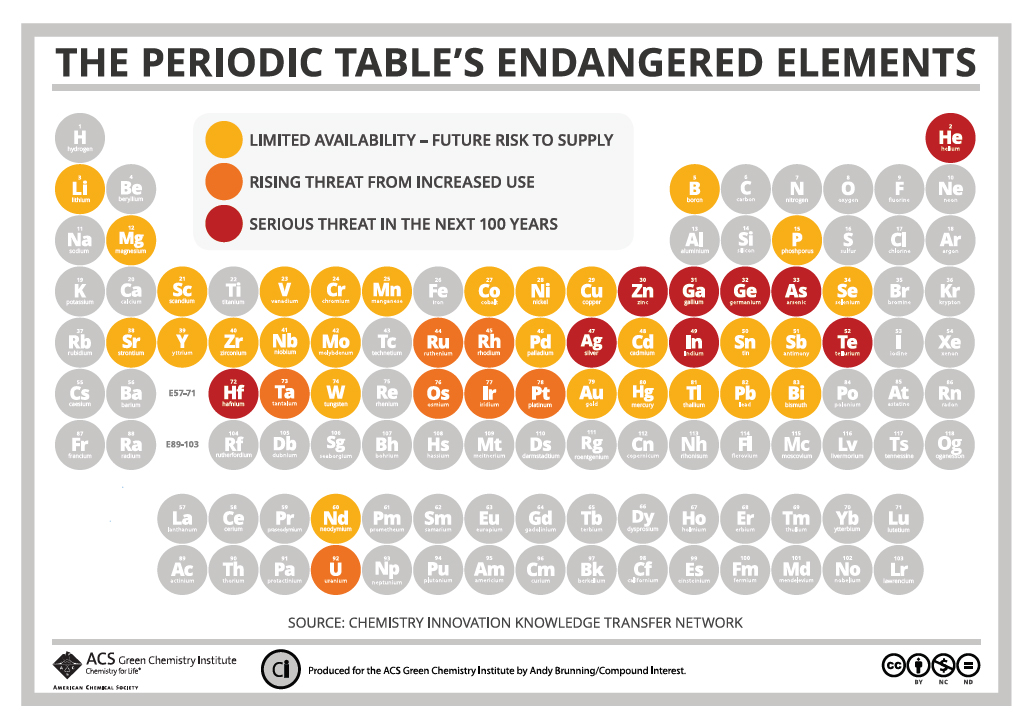
Obviously, they are not identical. This is because in these tables - there are many others along the same lines - there is a clear element of uncertainty as to what they report, which is understandable since they require an element of soothsaying in their generation. For instance, two report the element helium to be of concern in a century's time, whereas helium shortages are already observed, threatening access to some very high-powered scientific instruments including, but hardly limited to, MRI devices. To some extent the observed helium shortage is related in the present time to the closure of the Gulf of Hormuz since helium is isolated from fossil methane wells, in which it accumulated, over hundreds of millions, even billions, of years from alpha emissions connected with the decay the decay series of uranium. (It can be shown by appeal to the Maxwell-Boltzmann relations that helium is too light to be retained by Earth's gravity in its atmosphere; it ultimately boils off into space.) There probably are still significant deposits of radiogenic “fossil” helium remaining to be mined, but that said, political, economic and military issues play a role in access to elements critical to modern life.
I would argue as well, that the implications of any and all of the periodic tables shown delineate the ethical problem of abrogation of concern and responsibility to future generations.
Beyond that, to reiterate the importance of the issues on which soothsaying depends, decisions with respect to technological choices made in the present era will strongly affect the time to depletion for any element included as being of concern. In my earlier discussion of the risks to the copper supply in China, that risk is associated with a choice to embrace so called "renewable energy" in lieu of abandoning it entirely in favor of cleaner and far more sustainable nuclear energy. People can and will wave their hands and evoke, as the paper under discussion in the previous post does, recycling, although I tried, based on my own example, to delineate the limits that material diffusion to the population, along with other effects such as corrosion and process loses. These material losses are entropic in nature.
Replacement of copper with aluminum, already practiced in some high voltage transmission lines which are designed, using high voltage, to balance the effects of the penalty connected with aluminum’s higher electrical resistance when compared to that of copper, by accepting a tradeoff given the benefit of aluminum’s lower mass density, lower cost and higher availability. This resistance penalty will nevertheless have impacts on energy efficiency thus requiring larger generation sources since heat losses will be greater with aluminum compared to copper at any voltage. In addition to the losses to electrical resistance associated with replacing copper with aluminum, there are the insanely ballyhooed energy storage schemes so lazily bandied about as a "green" although the 2nd law of thermodynamics, to which I often appeal, makes clear that this nonsensical, again, cornucopian outlook will further increase the need for expanded generation thus necessitating higher levels of material consumption. Beyond this, there is the energy implications of merely collecting and processing the material to be recycled. These things should be, but often aren't, recognized.
Copper is a limited resource over the long term, as the periodic tables shown clearly show, even with the limited precision in the estimations.
But you might say, "NNadir, have you even looked at the periodic tables you've produced in this post? You're always pratting on that access to uranium is unlimited and yet, if you bother to look, in every case, uranium is listed as a critical element under threat."
Is it possible I am, if we are generous, confused, or if we are less forgiving, lying?
Let me start here in my own defense:
The assumption in including uranium as a critical element is that uranium can only be terrestrially mined from ores and used in the way it is used today. Nuclear energy advocates if one keeps track of them as I do, contain a subset of thorium aficionados who like to claim that there are more thorium than uranium minerals identified, some of which are already mined since many thorium ores are also lanthanide (aka "rare earth" ) ores, and the lanthanides are increasingly important to technology. In general the radioactive thorium is dumped with the lanthanide mine tailings, from which it could be theoretically isolated. Let's look at these claims more critically.
First there is the issue of how uranium is used. The thorium activists - and I don't have a problem with them as I do with so called "renewable energy" advocates - ignore the fact that in order to thorium to be used in a fission reactor it has to be subject to breeding, that is transmutation into the uranium isotope 233U. There is, however, no reason to limit this case to thorium. In any nuclear fission reactor, 238U undergoes the same process; it is bred into 239Pu and higher plutonium isotopes beyond, depending on the amount of time it spends in the reactor, the type of reactor, and the elemental and isotopic nature of the original fuel itself. The rate of breeding of 238U into 239Pu is slower in thermal reactors in which the speed of neutrons is roughly equivalent to that of atoms in atmospheric gas at ambient temperatures. Thermal reactors cannot convert all of the 238U into 239Pu but without recycling, which is desirable but not widely practiced, the rate of plutonium accumulation is constantly increasing as the use of nuclear energy continues and increases. Fast reactors can consume all of the 238U that's ever been mined into plutonium, and that ultimately into energy. (An unmoderated "fast" fission neutron has a "temperature," in the parlance of statistical thermodynamics, of around 16 billion degrees Kelvin; slowing neutrons is one source of the heat generated by nuclear fuels. Neutrons emerge from fission with energies this high but are slowed, "moderated," to increase the probability of fission in 235U.)
In the early days of the "first nuclear era" in the 1940's and 1950's, it was thought that uranium was a very rare element, mostly because very little work had been done at that time to look for it. Thus scientists and engineers thought at the time it would be necessary to build fast reactors to utilize nuclear power. Fast reactors can breed plutonium from 238U with a parameter designated as the "doubling time," - the time required to create twice as much fissionable atoms than that which was originally loaded. The doubling time is actually shorter in fast neutron spectra in the uranium/plutonium couple than it is for thorium transmuted into 233U in thermal reactors capable of breeding ratios greater than one, notably CANDU "heavy water" type reactors. The wide distribution of uranium ores on the planet was subsequently recognized, and that, coupled with dangerous antinuclear rhetoric that has resulted in the destruction of the planetary atmosphere, led to a decrease in enthusiasm for fast reactors, given some problematic but surmountable materials science issues they faced. In modern times this is changing, because, well, look at the periodic tables above. I have long argued that the uranium and thorium already mined could supply all of the world's energy needs for generations if and only if fast neutron spectrum is used. There are places in the world, notably Russia, where fast reactors run and run quite well. We do require more of them however.
Secondly, in the mid-20th century, owing to the work of Irving Langmuir and Edward Teller and colleagues mathematically describing different regimens of adsorption, respectively Langmuir and "BET" (Brunauer–Emmett–Teller) adsorption models, technologies were developed and now operate on an industrial scale, for the removal/collection of atomic and molecular species from very diffuse systems. It is this last, second, aspect, that the paper referenced at the outset of this post addresses. With respect to this case, it is the case that while thorium may be present in larger quantities in crustal rocks, if one moves beyond rock, uranium is actually not subject to depletion, but thorium is. It is on this aspect this post is focused.
To wit, from the introductory text of the paper:
Notably, Nature has identified UES among the seven chemical separations technologies with transformative global potential. (4) Currently, various UES technologies have been developed, such as adsorption, electrochemistry, membrane separation, and photocatalysis. The adsorption method, as the most mature technology in the UES field, utilizes highly selective adsorbents to recover uranium. It features operational simplicity and high safety, yet remains inherently limited by sluggish kinetics and low adsorption efficiency in natural seawater, thereby spurring the advent of electrochemical approaches. (5,6) Electrochemical approaches markedly accelerate uranium mass transfer and enrichment driven by the electric field, thereby achieving faster kinetics and controllable regeneration, notwithstanding the expense of elevated energy consumption and equipment complexity. (7) The emerging photocatalytic approach drives U(VI) reduction reactions through further incorporation of light energy as a green driving force, which represents an environmentally benign and low-carbon alternative for uranium recovery. Nevertheless, challenges persist in solid catalyst recovery under complex marine conditions. (8) Recently ascendant membrane separation extracts uranium through a synergistic mechanism of pore size sieving and electrostatic repulsion. This technique offers operational simplicity, facile integration, and theoretically low energy use, yet it faces challenges associated with severe membrane fouling and scaling. (9,10)
Several reviews summarizing the research on UES have been reported over the past decade. However, most of these reviews only concentrate on specific adsorbents or just discuss one UES approach and reaction mechanism, rather than providing a comprehensive overview of various UES technologies. For example, recent studies have comprehensively summarized the latest research progress and development prospects of porous organic frameworks, (11,12) carbon-based materials, (13) biobased adsorbents, (14) polymers (15) and various types of membrane-based adsorption materials. (16) Zuo et al. even discuss the latest design and synthesis strategies for UES materials from the perspective of materials space-tectonics, providing a guiding framework for the rational design of materials. (17) Yuan et al. reviewed the development history, principles, classifications, and applications of Capacitive deionization (CDI) technology. (18) Parker et al. elaborated in detail on the coordination chemistry pertinent to UES. (19) In 2023, Xie et al. provided a high-quality review, which primarily focused on different adsorbent design strategies and the progress in national marine experiments, briefly touching upon electrochemical and photochemical approaches of UES. (20) Despite these advances, the current UES literature lacks both a unified cross-technology comparative framework evaluated under consistent performance metrics and generalized material optimization strategies that transcend individual technology boundaries. Addressing these issues is essential for the rational development of next-generation UES technologies.
This work critically evaluates adsorption, electrochemistry, membrane separation, and photocatalysis within a unified comparative framework that encompasses principles, material design strategies, performance optimization logic, and practical deployment constraints...
Note, in stating that uranium supplies in the ocean "could" address human needs for 10,000 years, the authors have not recognized that rivers recharge uranium to the ocean. Uranium is part of a geological cycle by which uranium is extracted from the mantle - where it's decay series is the source of the bulk of the Earth's internal heat. (William Thompson's - aka "Lord Kelvin" - calculation of the age of the Earth based on heat transfer was wrong because he was unaware that the Earth is radioactive and thus has a source of internal heat. He died shortly after the discovery of radioactivity, and could not have known very much about the uranium decay series, much of which would be discovered after his death.) It will thus be impossible to remove uranium from the ocean; uranium is inexhaustible.
This is, as a review, a relatively long paper and it will not be possible to excerpt it much. Perhaps some graphics are worthy of consideration however to get a feel for the approach:
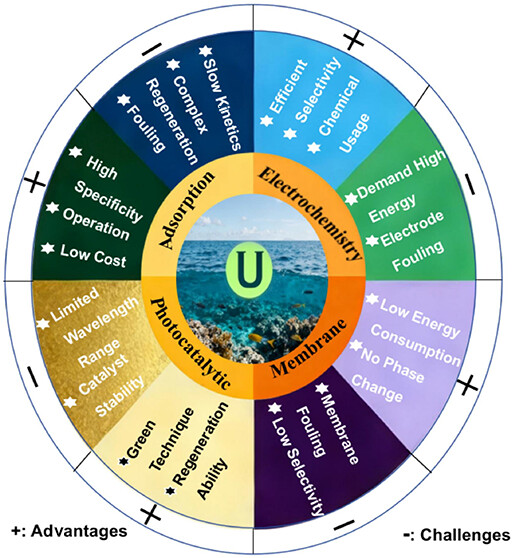
This first graphic, which is available from the abstract, is a nice shorthand for the nature, advantages and disadvantages of each approach. Note that for each approach with the exception of the photocatalytic approach, fouling is an issue. This would certainly be an issue were floating systems - some of these have been piloted - were utilized. It is a different issue however, should one rely on intakes of seawater for cooling or desalination. The former, cooling, is already a problem for nuclear plants cooled by seawater, and various means have been utilized to address it. The desalination case however suggests to me certain process steps that would be amenable to zero discharge supercritical water desalination, such as that I discussed in my "pie in the sky" approach to freeing California's freshwater for the restoration of its lost lakes, rivers and streams, and its increasingly depleted groundwater.
The Energy Required to Supply California's Water with Zero Discharge Supercritical Desalination.
One should recognize one's mortality with happy dreams.
Other graphics:
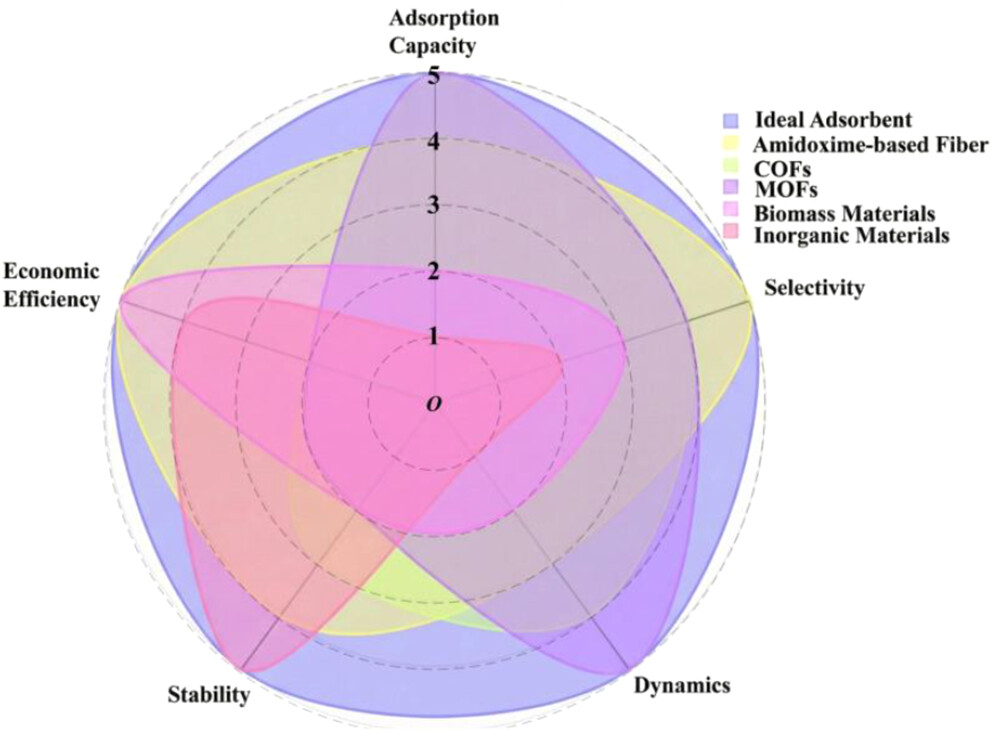
The caption:
The next two graphics are somewhat humbling to me, since I regard myself as being informed on this topic. Over several decades I've amassed a rather large electronic library of papers relating to nuclear energy. Using the Microsoft "property tools" for my computer directories, I can see that I have 12,610 Files, 765 Folders in my nuclear directory, 6,011 Files, 354 Folders for the nuclear "fuel" subdirectory, 2,357 Files, 148 Folders in the actinide subdirectory of the fuel directory, 476 Files, 37 Folders for the uranium subdirectory and only 144 Files, 5 Folders in the seawater capture directory. The papers in my files focus primarily on aldoxime functionalized resin adsorption approaches, and in a few cases, the uranium concentrating protein found in certain species of coral, but as the review makes clear, this ignores a plethora of other options.
One of the joys as my life approaches its end is to discover that while I think I know something about this subject or that subject, I actually know very little.
To wit:
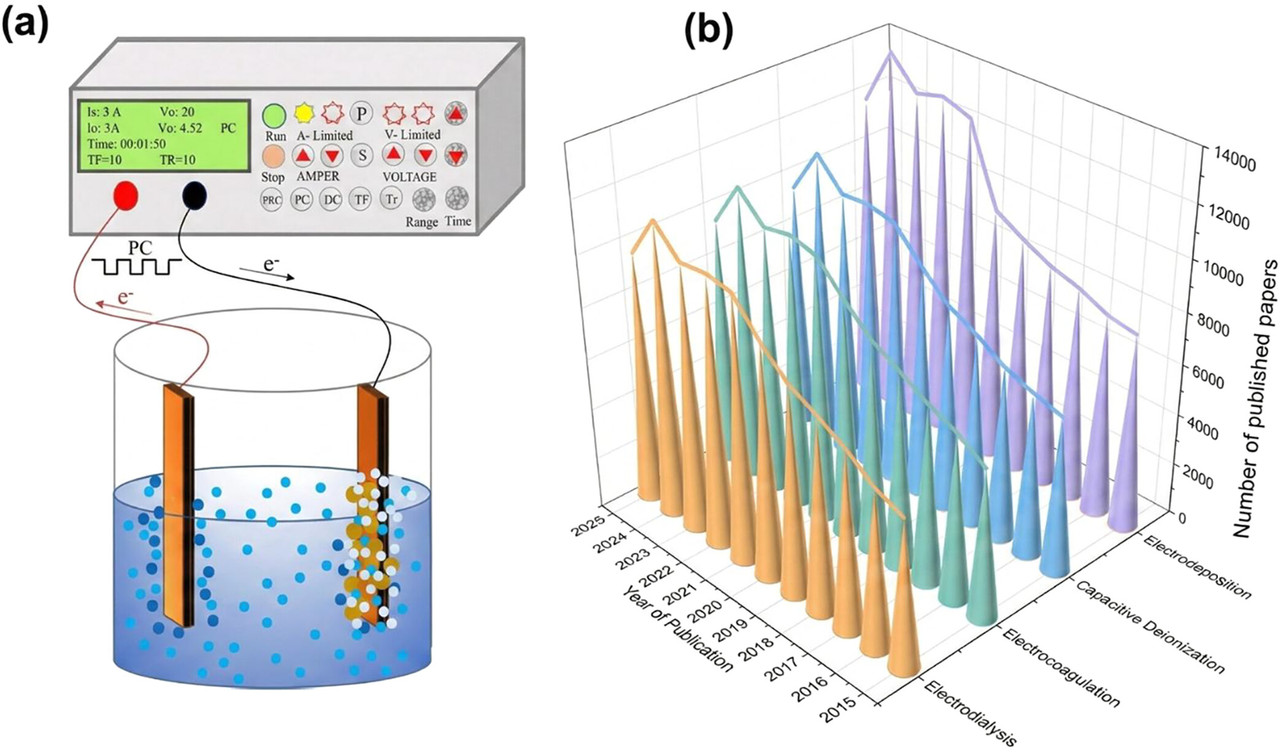
The caption:
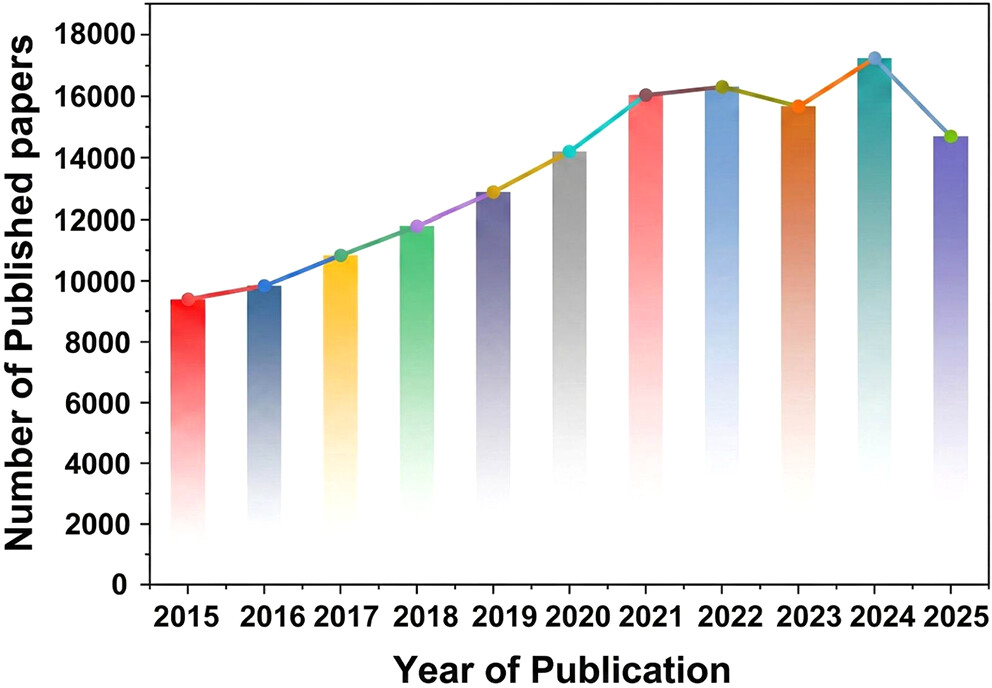
The caption:
Figure 10. Number of publications on UES using membrane separation method over the past decade (Data source: Web of Science database; keywords: uranium OR membrane separation OR seawater).
I added the bold in the captions of the last two graphics.
The oceans are not the only sources of diffuse uranium subject to recovery; other bodies of water have considerable uranium, including rivers, or as shown in the following graphic, salt lakes, some of which have higher concentrations of uranium than does seawater.
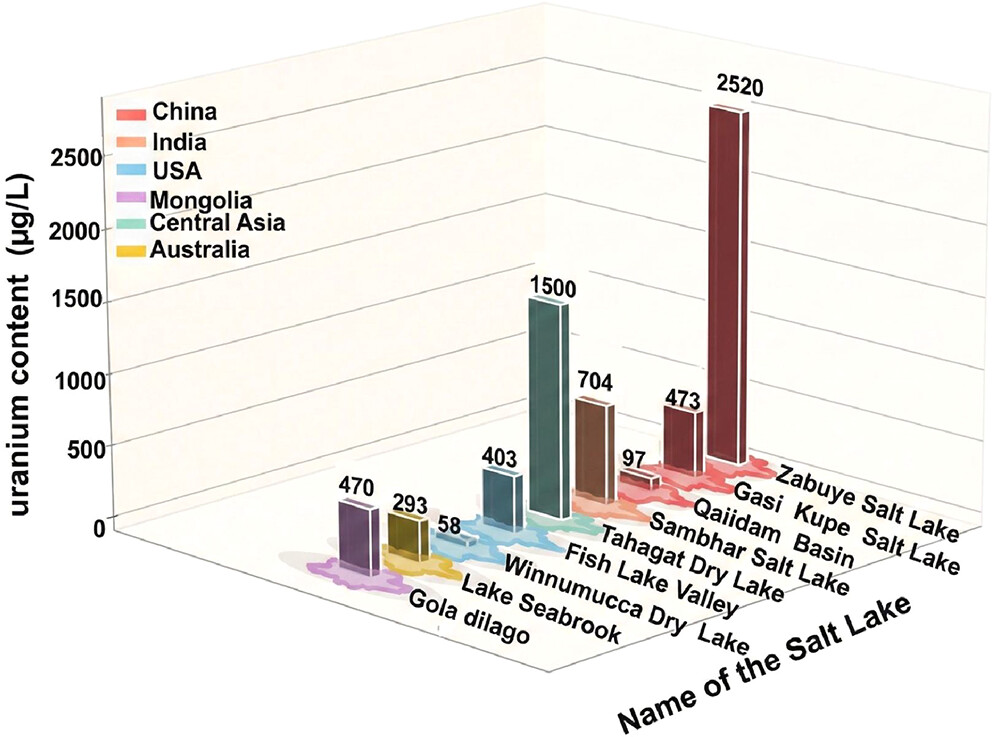
The caption:
Although uranium is naturally ubitiquous in the environment, uranium is chemotoxic, its chemotoxicity far outweighing its radiological risk. It is commonly found in groundwater, in rivers (which recharge ocean water through the weathering of uranium containing granite), as well. It is, to be clear, also found in the runoff from uranium mines, and discharges from uranium isolation and reprocessing plants. Many phosphate mines, a key to the world food supply, contain uranium; historically phosphate mines in Florida were regarded as potential sources of uranium until higher assay ores were discovered in the United States and elsewhere, the wide availability of said ores dampening enthusiasm for fast spectrum breeder reactors.
Some years ago the issue of natural uranium ("NORM" Naturally occurring nuclear materials) was discussed in some detail in EST Letters with respect to uranium in groundwater being mined and depleted in India:
Large-Scale Uranium Contamination of Groundwater Resources in India Rachel M. Coyte, Ratan C. Jain, Sudhir K. Srivastava, Kailash C. Sharma, Abedalrazq Khalil, Lin Ma, Avner Vengosh* Environ. Sci. Technol. Lett. 2018, 5, 6, 341–347. A graphic from that paper:
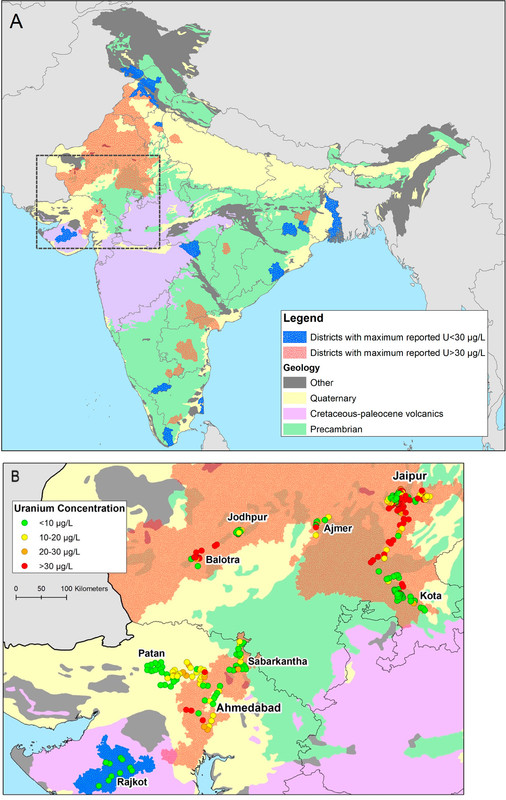
(The abstract shows a full map of India and regions where "NORM" uranium in groundwater is at high levels.)
These extraoceanic sources of uranium are obviously amenable to solid phase extraction of uranium both to remove uranium from natural waters as well as to provide uranium for use, if needed.
(The abstract shows a full map of India and regions where "NORM" uranium in groundwater is at high levels.)
The Indian case is hardly unique.
These extraoceanic sources of uranium are obviously amenable to solid phase extraction of uranium both to remove uranium from natural waters as well as to provide uranium for use, if needed.
For the record, India has piloted a uranium extraction system from seawater, not ground water:
cf. Recent International R&D Activities in the Extraction of Uranium from Seawater Linfeng Rao, Chemical Sciences Division, Lawrence Berkeley National Laboratory Berkeley, CA 94720 March 15, 2010.
In addition, the Indus and Ganges Rivers have the highest natural uranium levels in the world:
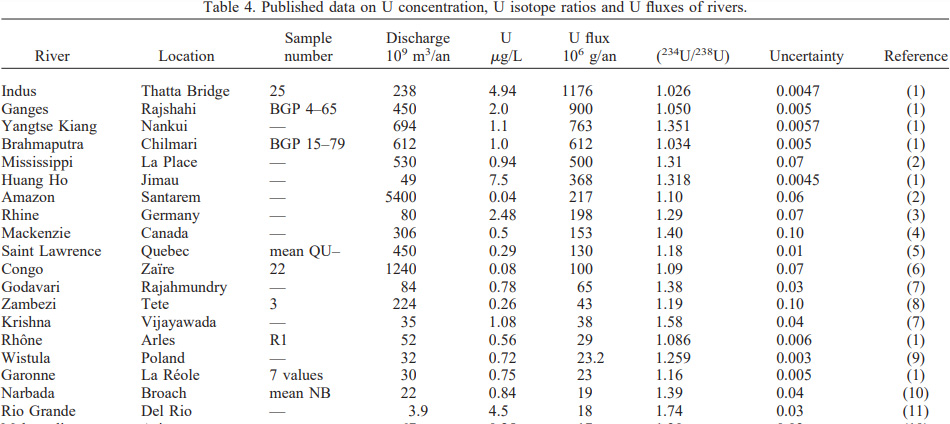
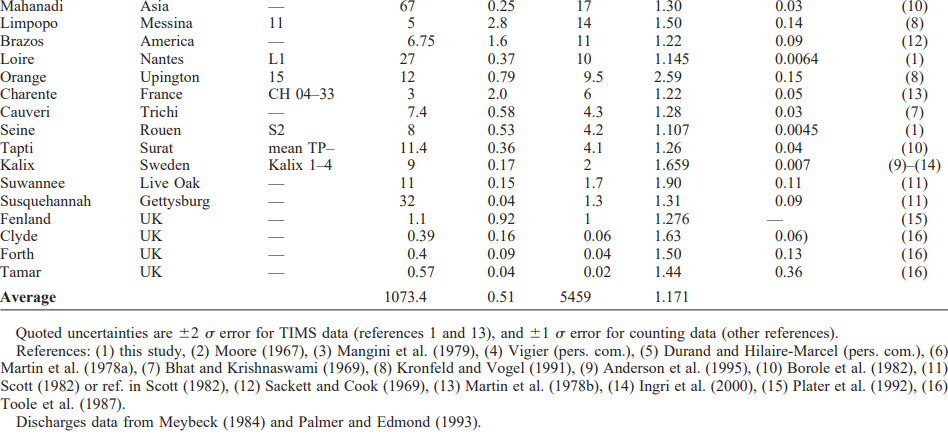
Source: François Chabaux, Jean Riotte, Norbert Clauer, Christian France-Lanord, Isotopic tracing of the dissolved U fluxes of Himalayan rivers: implications for present and past U budgets of the Ganges-Brahmaputra system, Geochimica et Cosmochimica Acta, Volume 65, Issue 19, 2001, Pages 3201-3217.
Now, the issue of critical materials is a very serious one, given the number of periodic tables, of which those shown at the opening of this post are merely a subset, devoted to the topic along with the textual accounts in which they occur. However the point of this post is that the inclusion of uranium in this case depends highly on the way uranium is used and not on potentially viable systems of use, the most important of which remains, as has always been the case, the transmutation of 238U into mixed plutonium isotopes.
One may note that the solid phase extraction is potentially useful for the extraction of other elements contained in the periodic tables listed above. Indeed solid phase extraction systems are available for many of these elements. One can commercially purchase, for example, a system to remove arsenic from groundwater if one's source of water is, as mine is, a well. The system relies on iron filings as the solid phase extraction media. Similar systems are known for the threatened elements lead and mercury, the latter being a rising contaminant of both freshwater and seawater.
However, these elements in use require greater bulk in their commercial application. Transmuted into plutonium, which has an energy density of around 80 trillion joules per kilogram, excluding neutrinos, when completely fissioned, equivalent to the combustion of about 2500 tons of coal. At the current world energy consumption of approximately 650 Exajoules per year and rising, all of the world's energy demands could be met with a little over 8000 tons of plutonium per year. (This much plutonium is not available currently, but neither are the reactors that might use it: Developing this infrastructure would require a serious commitment to eliminate the use of fossil fuels, a commitment that does not exist because of the hyping of so called "renewable energy;" which I personally consider a front for maintaining the fossil fuel industries stranglehold on the planet.
Because of its low mass to energy density, lower than even the fossil fuels on which it depends, and its lack of reliability, so called "renewable energy" is not sustainable. As I pointed out previously in another post, that about copper flows in China, we can and will run out of copper if we insist on employing for systems that are unreliable, whose energy availability is well below 50%, more like less than 30% for wind, and 25% of the time for solar energy in most places. The dubious claim, in defiance of the laws of physics, that energy storage is "green" and "sustainable" make the mass dependence even worse. Hooking up batteries to a grid requires copper, not to mention threatened elements like cobalt, nickel, in some cases phosphorous, and in the tiresome and nonsensical fossil fuel greenwashing hydrogen schemes that rear their hydra like heads, decade after decade ad nauseum, platinum and palladium. The argument made by apologists for fossil fuel dependent so called "renewable energy" lazily producing selectively sourced charts and graphs showing that reserves of copper and other elements they propose to use profligately can last for 100 years or even longer ignores, this with open contempt, the needs of humanity for millennia thereafter.
None of this implies that nuclear energy, which is economically and environmentally, in both the justice and sustainability sense, superior to all other forms of energy, does not face limitations in deployment. It cannot grow fast enough to eliminate dependence on fossil fuels in the near term, although it has demonstrably over the last historical decades, particularly in the last half of the 20th century, grown much faster than either solar or wind, at a lower economic and environmental price, despite much denialist caterwauling to the contrary. It is simply the best tool, by far, to ameliorate the use of fossil fuels to the extent their use can be addressed. It is also the only tool that can ever lead to the elimination of fossil fuels, since it relies on the only fuel with higher energy density than oil, gas and coal. Although the need for uranium enrichment - the use of which is used disingenuously by political figures to start fossil fuel wars - cannot be eliminated for decades until inventories of plutonium and 233U (from thorium) reach levels sufficient to do away with enrichment are assembled, the route to their accumulation is well known and well understood. In the case of plutonium, production has operated on an industrial scale, albeit not using processes that are, in my view at least, the best available.
Nuclear energy is neither risk free nor entirely environmentally benign, but, to repeat my oft repeated mantra, it needs not be either to be vastly superior to all other options.
A great deal is being written about achieving circularity for all the elements in the periodic table, possibly the most urgent of these being for carbon, although carbon is plentiful, too plentiful. The issue with achieving circularity is material entropy, and we ignore as much at our peril. As is the case with entropy in the more commonly stated case in thermodynamics, material entropy like thermodynamic entropy requires energy - often vast amounts of energy - to overcome. The more diffuse a material is, the higher the energy demand to recover it will be. Clearly and unambiguously, it should be clear that energy density is critical to providing this energy, and at this point in human history, only one material has demonstrated such density, the ubiquitous element uranium.
Have a nice evening.
 = new reply since forum marked as read
Highlight:
NoneDon't highlight anything
5 newestHighlight 5 most recent replies
= new reply since forum marked as read
Highlight:
NoneDon't highlight anything
5 newestHighlight 5 most recent replies

wyn borkins
(1,658 posts)
NNadir
(38,981 posts)...my sons will sit around a table with their wives after I'm dead and say, "Dad would have loved this."
I don't expect that to happen; I think we've screwed future generations over by ripping the shit out of the Earth for our idiotic bourgeois affectations. That said if anything is to be saved or even restored, I'd like to think one of my sons will be on the front lines.
All of my thoughts on energy and the environment at the end of my life are about a future I will not see. To the extent I involve myself in soothsaying, what I expect is bleak. I very much would like to be wrong.
wyn borkins
(1,658 posts)And I also...sincerely hope you are wrong.