Science
Related: About this forumThese giant sea reptiles lived in freshwater rivers, too (earthsky.org)
Posted by
Shireen Gonzaga
December 18, 2025
Chemical analysis of a mosasaur tooth reveals a surprise
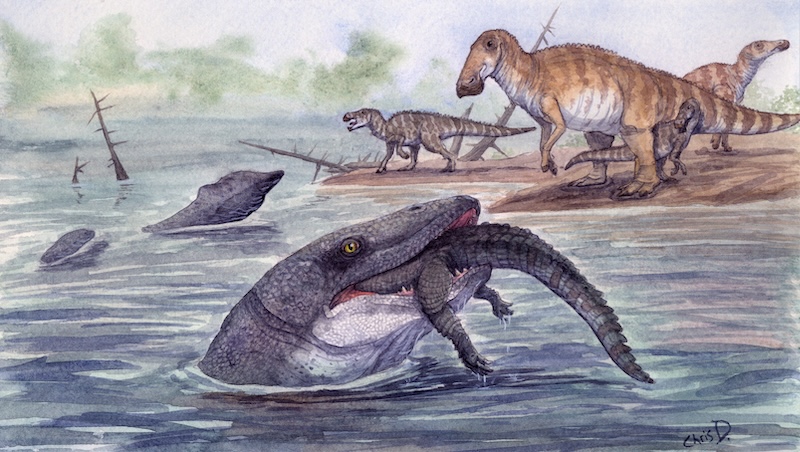
Mosasaurs were giant aquatic reptiles that lived 94 to 66 million years ago. While T. rex was the dominant predator on land, mosasaurs were the apex predators of the sea. But scientists from Uppsala University in Sweden said on December 12, 2025, that they have new evidence showing mosasaurs also lived in freshwater, in inland rivers. Their diverse habitats suggest they were adapting to a changing environment.
In 2022, researchers found a mosasaur tooth at an unexpected location in North Dakota. They recovered it from ancient river deposits alongside a T. rex tooth and the jawbone of a freshwater crocodile-like (or crocodilian) reptile. Plus, the area was known for its fossilized Edmontosaurus duck-billed dinosaurs.
How did a seagoing mosasaur’s tooth end up in a freshwater river?
In this new study, scientists found answers in the mosasaur’s tooth enamel. A chemical analysis of certain elements revealed that this mosasaur had, in fact, lived in freshwater, not salt water.
The researchers published their study in the peer-reviewed journal BMC Zoology on December 12, 2025.
***
more: https://earthsky.org/earth/giant-sea-reptiles-mosasaurs-freshwater-predators/?mc_cid=8062ada9aa
 = new reply since forum marked as read
Highlight:
NoneDon't highlight anything
5 newestHighlight 5 most recent replies
= new reply since forum marked as read
Highlight:
NoneDon't highlight anything
5 newestHighlight 5 most recent replies

rampartd
(4,462 posts)66 million years ago was the Chicxulub event, if any dinosaur survived, why not the aquatic ones?

Dave Bowman
(7,038 posts)
erronis
(23,441 posts)It came into existence around 20,000 years ago.
That area was covered by the Iapetus Ocean around 500 million years ago before the orogeny of Green and Adirondack mountains created the inland sea.

eppur_se_muova
(41,604 posts)So too were pterosaurs.
But your point is still an interesting one.
The extinction event wasn't selective for dinosaurs, but apparently for all larger megafauna, particularly on land.
The only large survivors were some crocodilians, turtles, sharks, and apparently giant squid. All were at least partially aquatic, and the reptiles were cold-blooded -- both can estivate for many months (crocs in burrows, turtles in muddy bottoms without even coming up for air). It seems large, active, high-metabolism (i.e. needing high food input) animals unprotected by large volumes of water were vulnerable. Fully aquatic (non-air breathing) animals such as sharks would have had the advantage of being able to swim away from the most affected areas -- even swimming as far as the antipodes, as some large sharks and whales do today. And benthic animals, such as giant squid, would have been most protected of all.
Currently, mosasaurs and ichthyosaurs are believed to have been warm-blooded, so apparently unable to survive the post-Chicxulub environment.
czarjak
(13,564 posts)
littlemissmartypants
(32,806 posts)
Inkey
(506 posts)to exist in both fresh and salt water. Seeking food, breeding, and climate diversity, are the hallmarks of evolving adaptations.

Danascot
(5,201 posts)