Latest Breaking News
In reply to the discussion: Biden administration approves limited development of Alaska's Willow oil project [View all]
BumRushDaShow
(172,716 posts)But one of the biggest shocks that I experienced over 35 years ago, was when I went to a training course in Los Angeles, which was my first trip to California. And much to my amazement and chagrin, was what I saw along the trip from the airport to the hotel. The freeway was LINED with... brace for it.... OIL PUMPS.
I was like WTF?  I had NO IDEA. Not one "movie or television location" image nor P.R./tourist-directed image shows "oil pumps" in California. "HOLLYWOOD".
Little or nothing is uttered (at least outside of California) about "oil drilling and pumping" in that dark blue, "energy conscious" state. And the wells ARE "active". It was my first time actually seeing an oil well pump "in person". And I was born and raised in a city that at one time had a cluster of the largest oil refineries on the east coast.
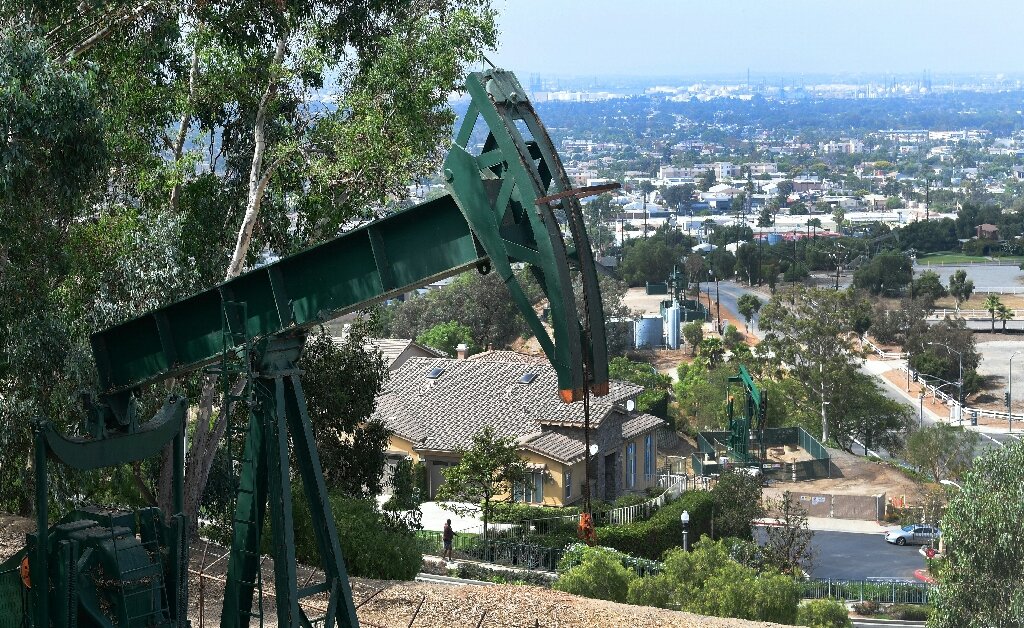
no drilling where we're living | Feb. 10, 2022
L.A. Just Banned Oil Drilling. Now Comes the Hard Part.
By Alissa Walker, a Curbed senior writer
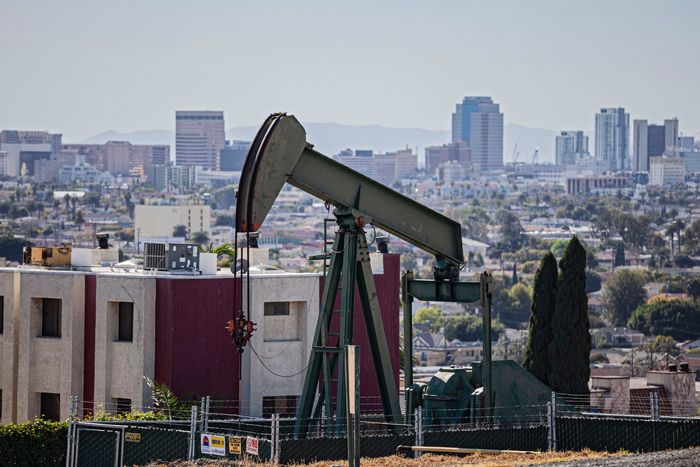
Across Los Angeles, oil wells bob in yards, near schools, and at parks. Photo: Citizen of the Planet/Education Images/Universal Images Group via Getty Images
In a city aiming to be carbon-neutral by 2035, neighborhood oil wells have become an increasingly incongruous element of the Los Angeles landscape. About 600,000 Angelenos live within a half-mile of one of L.A.’s 1,000 active wells, where a recent study demonstrated that toxic particulates can travel up to two-and-a-half miles, blanketing local communities with chronic respiratory issues and higher cancer rates. Starting in 2013, the unusually broad coalition of groups known as Stand Together Against Neighborhood Drilling (STAND L.A.) began a campaign under the slogan “No drilling where we’re living.” And last week — nearly a decade after the campaign began — L.A. finally passed a motion to officially phase out oil and gas extraction. It’s a first step toward holding oil companies accountable for the damage they have inflicted upon L.A.’s most vulnerable neighborhoods for over a century. “It’s a vision beyond oil drilling,” says Eric Romann, an environmental-justice coordinator for Physicians for Social Responsibility and a co-leader of STAND L.A.’s campaign. “It’s the vision that communities that are overwhelmingly Black and Latino and working class who have borne the brunt should actively have a role in shaping what their future will look like.”
The oil companies won’t exactly quit drilling tomorrow. New drilling permits would likely stop being issued by the end of 2022, but oil companies may get up to a 20-year period to phase out everything that’s already siphoning fossil fuels out of the ground. That will mean not only properly plugging wells — including cleaning up 3,000 inactive drilling sites and another 1,000 abandoned wells located around the city — but also fully remediating the land. If the city can prove oil well operators have already recouped their initial investment, it may go faster. Neighboring Culver City recently conducted a similar study for its oil wells and is requiring full remediation by 2026.
Since 1892, L.A. has been dotted with oil wells, which lined up along beaches and sprouted out of backyards. But whereas drilling sites in wealthier neighborhoods have largely shut down over the last 25 years — a few continue to operate, cleverly camouflaged and with improved safety measures in place — many of the sites in lower-income communities have persisted. The city’s new ordinance would start to chip away at L.A.’s many land-use inequities, from its freeways to its port, says Romann: “We have an economy based not only on the extraction but the production and consumption of fossil fuels, and in order for that to function, we have placed this in the neighborhoods where the people with the least power live.”
That’s a start, but there’s a lot of petroleum infrastructure left in L.A. County, and that means the hardest part comes next. The region is home to multiple refineries that pollute the same neighborhoods affected by oil drilling. Remember that one of the largest environmental disasters in U.S. history was a gas leak at a storage facility in Aliso Canyon. Six years later, residents are still experiencing health issues, yet officials recently voted to expand the facility anyway. Reforms at the county and state level are helping, like new rules governing setback requirements around schools and parks. (The state also continues to issue new fracking permits but says it wants to phase out oil extraction by 2045.) There’s assistance coming from the Biden administration as well: Interior Secretary Deb Haaland visited L.A. in December and promised federal funds to clean up drill sites.
(snip)
https://www.curbed.com/2022/02/los-angeles-ends-oil-drilling-stand.html
When I had a work conference in Galveston, TX almost 30 years ago, the highway trip from Houston to Galveston was littered with retread truck tires and oil pumps. I expected that THERE but NOT California. And these California pumps are IN the city where people LIVE - NOT in the middle of the wilderness and tundra near the Arctic Circle.

The lack of focus on THAT - achieving environmental justice for EXISTING, poorly-maintained fossil fuel extraction locations in the middle of URBAN areas - is exactly the scotoma that many environmentalists seem to suffer from due to racism. It's not going to happen overnight but valid replacements need to be developed - and not just insisting that everyone "buy an EV" and "just plug it into a socket in their garage" (assuming the person lives in an actual house and not an apartment, and even has a garage or off-street parking to run a damn cord because at least here in Philly, you can't legally run EV electric cords across sidewalks to the street where the car might be parked).
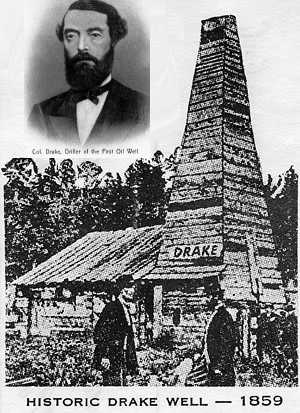
Of course the first oil well was drilled right here in PA (Titusville, PA).
(sorry to dump that as a reply to you
 )
)Edit history
Recommendations
0 members have recommended this reply (displayed in chronological order): = new reply since forum marked as read
Highlight:
NoneDon't highlight anything
5 newestHighlight 5 most recent replies
RecommendedHighlight replies with 5 or more recommendations
= new reply since forum marked as read
Highlight:
NoneDon't highlight anything
5 newestHighlight 5 most recent replies
RecommendedHighlight replies with 5 or more recommendations