Welcome to DU!
The truly grassroots left-of-center political community where regular people, not algorithms, drive the discussions and set the standards.
Join the community:
Create a free account
Support DU (and get rid of ads!):
Become a Star Member
Latest Breaking News
Editorials & Other Articles
General Discussion
The DU Lounge
All Forums
Issue Forums
Culture Forums
Alliance Forums
Region Forums
Support Forums
Help & Search
Weekend Economists Volvemos a Puerto Rico May 22-25, 2015 [View all]
As promised, the survey of La Isla del Encanto continues...
Christopher Columbus put Puerto Rico on the map, so to speak. He brought disease, slavery, Catholicism and Capitalism to the tribes that had lived forever without them.
But in 1898, Republican President William McKinley declared war on Spain (the Spanish-American War) and Puerto Rico, long desired by the Navy as a fueling station, was one of the plums of that victorious conquest....
The Spanish–American War (Spanish: Guerra hispano-estadounidense) was a conflict in 1898 between Spain and the United States, the result of U.S. intervention in the Cuban War of Independence. U.S. attacks on Spain's Pacific possessions led to involvement in the Philippine Revolution and ultimately to the Philippine–American War.
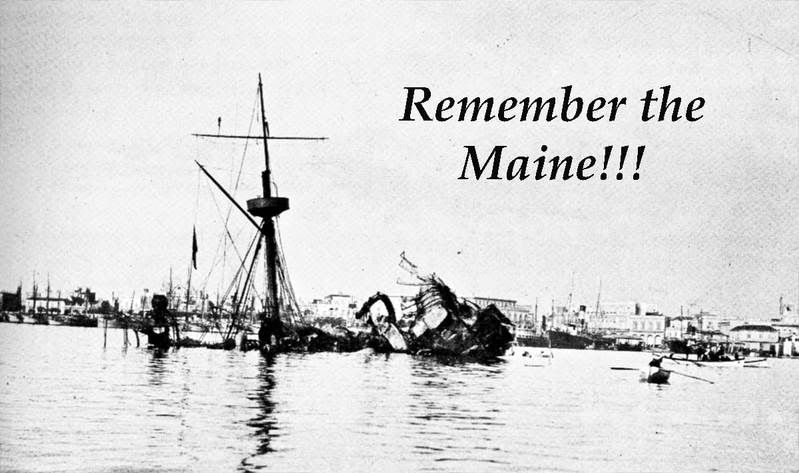
Revolts against Spanish rule had occurred for some years in Cuba. There had been war scares before, as in the Virginius Affair in 1873. In the late 1890s, US public opinion was agitated by anti-Spanish propaganda led by journalists such as Joseph Pulitzer and William Hearst which used yellow journalism to criticize Spanish administration of Cuba. After the mysterious sinking of the US Navy battleship Maine in Havana harbor, political pressures from the Democratic Party and certain industrialists pushed the administration of Republican President William McKinley into a war he had wished to avoid. Compromise was sought by Spain, but rejected by the United States which sent an ultimatum to Spain demanding it surrender control of Cuba. First Madrid, then Washington, formally declared war.
Although the main issue was Cuban independence, the ten-week war was fought in both the Caribbean and the Pacific. US naval power proved decisive, allowing expeditionary forces to disembark in Cuba against a Spanish garrison already brought to its knees by nationwide Cuban insurgent attacks and further wasted by yellow fever. Numerically superior Cuban, Philippine, and US forces obtained the surrender of Santiago de Cuba and Manila despite the good performance of some Spanish infantry units and fierce fighting for positions such as San Juan Hill. With two obsolete Spanish squadrons sunk in Santiago de Cuba and Manila Bay and a third, more modern fleet recalled home to protect the Spanish coasts, Madrid sued for peace.
The result was the 1898 Treaty of Paris, negotiated on terms favorable to the US, which allowed it temporary control of Cuba, and ceded indefinite colonial authority over Puerto Rico, Guam and the Philippine islands from Spain. The defeat and collapse of the Spanish Empire was a profound shock to Spain's national psyche, and provoked a thorough philosophical and artistic revaluation of Spanish society known as the Generation of '98. The United States gained several island possessions spanning the globe and a rancorous new debate over the wisdom of expansionism.
The war began exactly fifty-two years after the Mexican–American War began, and was one of only five US wars to have been formally declared by Congress.
Revolts against Spanish rule had occurred for some years in Cuba. There had been war scares before, as in the Virginius Affair in 1873. In the late 1890s, US public opinion was agitated by anti-Spanish propaganda led by journalists such as Joseph Pulitzer and William Hearst which used yellow journalism to criticize Spanish administration of Cuba. After the mysterious sinking of the US Navy battleship Maine in Havana harbor, political pressures from the Democratic Party and certain industrialists pushed the administration of Republican President William McKinley into a war he had wished to avoid. Compromise was sought by Spain, but rejected by the United States which sent an ultimatum to Spain demanding it surrender control of Cuba. First Madrid, then Washington, formally declared war.
Although the main issue was Cuban independence, the ten-week war was fought in both the Caribbean and the Pacific. US naval power proved decisive, allowing expeditionary forces to disembark in Cuba against a Spanish garrison already brought to its knees by nationwide Cuban insurgent attacks and further wasted by yellow fever. Numerically superior Cuban, Philippine, and US forces obtained the surrender of Santiago de Cuba and Manila despite the good performance of some Spanish infantry units and fierce fighting for positions such as San Juan Hill. With two obsolete Spanish squadrons sunk in Santiago de Cuba and Manila Bay and a third, more modern fleet recalled home to protect the Spanish coasts, Madrid sued for peace.
The result was the 1898 Treaty of Paris, negotiated on terms favorable to the US, which allowed it temporary control of Cuba, and ceded indefinite colonial authority over Puerto Rico, Guam and the Philippine islands from Spain. The defeat and collapse of the Spanish Empire was a profound shock to Spain's national psyche, and provoked a thorough philosophical and artistic revaluation of Spanish society known as the Generation of '98. The United States gained several island possessions spanning the globe and a rancorous new debate over the wisdom of expansionism.
The war began exactly fifty-two years after the Mexican–American War began, and was one of only five US wars to have been formally declared by Congress.
And things have been downhill ever since....our Instant Empire!

61 replies
 = new reply since forum marked as read
Highlight:
NoneDon't highlight anything
5 newestHighlight 5 most recent replies
= new reply since forum marked as read
Highlight:
NoneDon't highlight anything
5 newestHighlight 5 most recent replies
= new reply since forum marked as read
Highlight:
NoneDon't highlight anything
5 newestHighlight 5 most recent replies
I sincerely doubt that anyone at the FDIC will waste this long weekend in pursuit of failure
Demeter
May 2015
#1
The Confidential Memo at the Heart of the Global Financial Crisis August 22, 2013 By Greg Palast
Demeter
May 2015
#11
Charles Krauthammer's false statement about the US Constitution / Glenn Greenwald
Demeter
May 2015
#5
Secret White House tapes reveal that LBJ knew about Nixon's 'treason' - but never reported it
Demeter
May 2015
#6
King Henry I, like Richard III, could be buried in a car park, say archaeologists
Demeter
May 2015
#12
Direct Deposit and Social Security: Not so Nice for Those who Owe by Nathalie Martin
Demeter
May 2015
#15
The London Whale and the real link between the US economy and Cyprus Dean Baker
Demeter
May 2015
#26
Morgan Stanley wealth manager who had an affair with a client could cost the bank $400 million
Demeter
May 2015
#28
As the UK has discovered, there is no postindustrial promised land | Business | The Guardian
MattSh
May 2015
#32
Europe’s ban on seal products has been awful for Greenland’s Inuits, and for seals - Quartz
MattSh
May 2015
#44
Basically unaffordable Replacing welfare payments with “basic income” for all alluring but expensive
Demeter
May 2015
#48
Woman Billed $1,000 For Credit Card Error Gets $83 Million Verdict, But IRS Gets Last Laugh
Demeter
May 2015
#50