Simple Tactic Results in Dramatic Water Conservation [View all]
http://www.fau.edu/newsdesk/articles/lawn-watering-study.php
[font face=Serif][font size=5]Simple Tactic Results in Dramatic Water Conservation[/font]
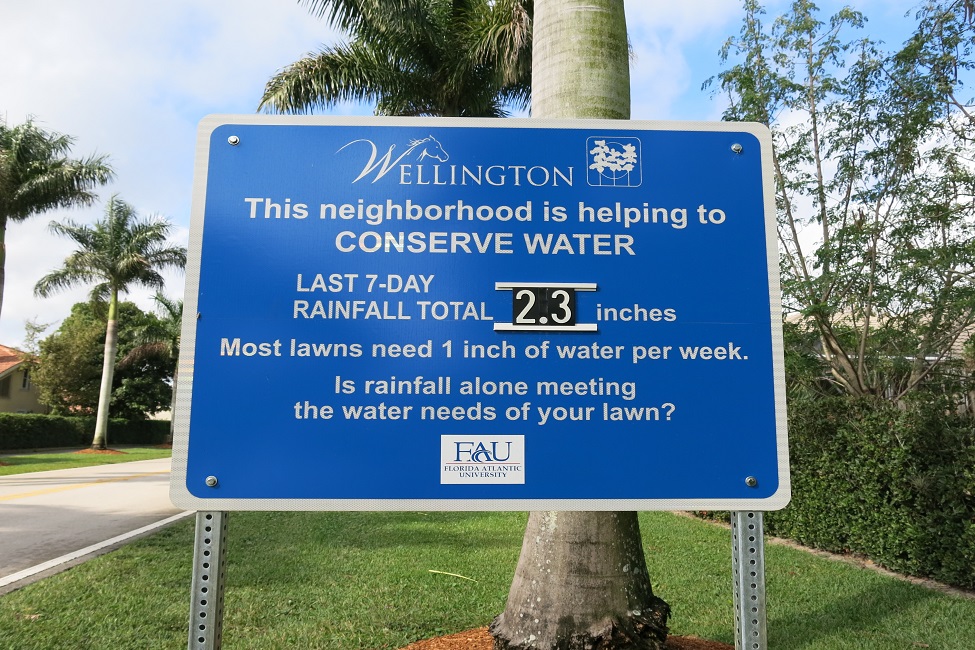
A highly visible road sign and simple communication to hundreds of households in South Florida resulted in an astounding 61 percent decrease in lawn watering in the experimental households as compared to the control group.
By gisele-galoustian | 6/20/2017
[font size=3]Rain or shine has new meaning thanks to an innovative, inexpensive and simple tactic developed by researchers at Florida Atlantic University that will really change how people think about watering their lawns. The tactic? A straightforward road sign.
…
For two years, which included two annual wet and dry seasons, they conducted a unique study in Wellington, a suburban village in South Florida, to demonstrate how you can save a lot of water by simply providing people with more information than just directives, schedules or guidelines about which days of the week they can water their lawns. Wellington provided the perfect venue for this study since the village is located in a region that has distinct wet and dry seasons and that is subject to permanent year-round mandatory water restrictions. Additionally, Wellington was interested in the research and helped to implement the pilot program. Results of their study are published in the current issue of the
Journal of Environmental Management.
“The Rain-watered Lawn,” a pilot program, was implemented as a weather-based add-on water conservation strategy to find out if informing lawn-watering behavior is more effective than just having mandatory water restrictions alone. The study involved a total of 627 households that were divided into two groups: 321 households assigned to an experimental group, and 306 households assigned to a control group who were subject to only the existing water restrictions.
For the study, the researchers created a highly visible road sign that matched existing road signs, and placed them close to the entrances of the experimental neighborhoods. The purpose of the signs was to communicate rainfall levels in the last seven days and to remind people that most South Florida lawns only need one inch of water per week. The bottom of the sign read: “Is rainfall alone meeting the water needs of your lawn?” At the same time that the signs went up, households in the experimental group received a postcard and leaflet about the signs and informed them that existing water restrictions were not being replaced or modified.
…[/font][/font]

 = new reply since forum marked as read