Scientists Opened a Sealed Cave for 20,000 Years and Found Perfectly Preserved Artworks [View all]
Hidden behind stone for 20,000 years, this cave holds images that shouldn’t have survived. What scientists uncovered inside is remarkable, yet one key question still has no clear answer: who made them?
Published on May 5, 2026 at 07:45
|
Written by Melissa Ait Lounis
|
Reading time : 3 minutes
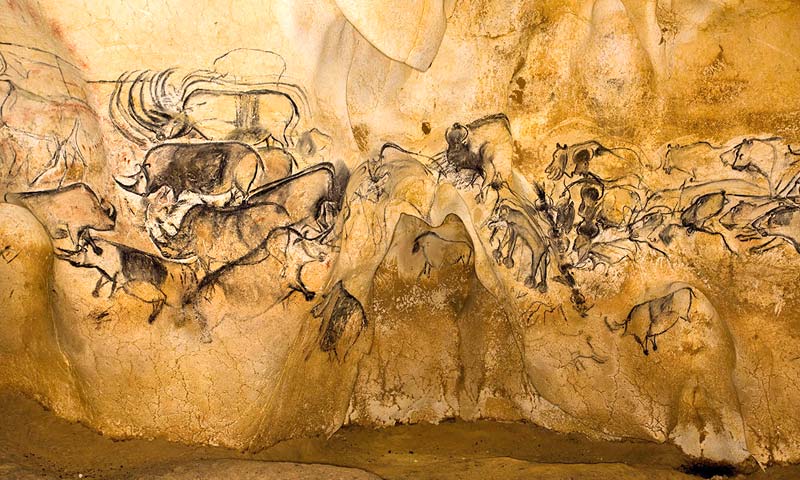
© Scientists Opened A Sealed Cave For 20,000 Years And Found Perfectly Preserved Artworks With No Identified Creators. Credit: Stéphane Jaillet / CNRS (French National Centre for Scientific Research) / Chauvet Cave Team / French Ministry of Culture
Hidden for thousands of years, the Grotte Chauvet-Pont d’Arc in southern France holds some of the oldest known human drawings. Discovered in 1994, the cave reveals artwork that has remained almost exactly as it was left more than 30,000 years ago.
The images, dated between 30,000 and 32,000 years, are among the earliest figurative representations ever found. More than 1,000 drawings cover the cave walls, along with animal remains and human footprints. Located above the Ardèche River, the cave stretches across about 8,500 square meters. Its long isolation has preserved a rare and complete snapshot of Aurignacian life and artistic expression.
A Sealed Sanctuary Of Prehistoric Life
Around 20,000 years ago, a rockfall blocked the cave’s entrance, cutting it off from the outside. That event turned out to be key: it kept the interior stable and protected the drawings from damage.
UNESCO reports that this natural seal helped keep the hollow in a “pristine state,” with no later human interference. Unlike many other prehistoric sites, Chauvet wasn’t revisited or altered over time. What remains is a kind of time capsule. The ground still holds footprints, and the walls still carry the original marks.
More:
https://dailygalaxy.com/2026/05/sealed-cave-20000-years-preserved-artworks/

 = new reply since forum marked as read