Welcome to DU!
The truly grassroots left-of-center political community where regular people, not algorithms, drive the discussions and set the standards.
Join the community:
Create a free account
Support DU (and get rid of ads!):
Become a Star Member
Latest Breaking News
Editorials & Other Articles
General Discussion
The DU Lounge
All Forums
Issue Forums
Culture Forums
Alliance Forums
Region Forums
Support Forums
Help & Search
erronis
erronis's Journal
erronis's Journal
May 25, 2026
An analysis found that Climate TRACE may substantially underestimate city vehicle CO2 emissions, raising concerns about data accuracy in climate policy.
Not in a good way for the planet, unfortunately.
Scientists Discover Major Errors in Al Gore-Founded Climate Pollution Database
https://scitechdaily.com/scientists-discover-major-errors-in-al-gore-founded-climate-pollution-database/An analysis found that Climate TRACE may substantially underestimate city vehicle CO2 emissions, raising concerns about data accuracy in climate policy.
Not in a good way for the planet, unfortunately.
Some of the world's most widely used climate emissions estimates could be missing far more pollution than anyone realized.
A new study from Northern Arizona University reports that the global greenhouse gas emissions database created by the Climate TRACE consortium, co-founded by former Vice President Al Gore, may be undercounting vehicle carbon dioxide emissions in cities by an average of 70%.
The findings, published in Environmental Research Letters, come as governments and cities increasingly rely on high-resolution emissions data to shape climate policy and track progress toward emissions goals.
Led by Kevin Gurney, a professor in NAU's School of Informatics, Computing, and Cyber Systems (SICCS), the study examined how Climate TRACE estimated emissions from cars and trucks and compared those figures against established transportation and fuel-use data. According to Gurney, the discrepancies -- combined with similar issues his team previously identified in power plant emissions estimates -- raise broader concerns about the reliability of rapidly emerging AI-driven climate monitoring systems.
"Given the importance of vehicle CO2 emissions in cities, we carefully examined the Climate TRACE data which relied on promising new artificial intelligence-based approaches," Gurney said. "When combined with our previous study on Climate TRACE power plant CO2 emissions, our results suggest that the Climate TRACE data significantly underestimate over half of U.S. fossil fuel-based CO2 emissions in cities."
. . .
A new study from Northern Arizona University reports that the global greenhouse gas emissions database created by the Climate TRACE consortium, co-founded by former Vice President Al Gore, may be undercounting vehicle carbon dioxide emissions in cities by an average of 70%.
The findings, published in Environmental Research Letters, come as governments and cities increasingly rely on high-resolution emissions data to shape climate policy and track progress toward emissions goals.
Led by Kevin Gurney, a professor in NAU's School of Informatics, Computing, and Cyber Systems (SICCS), the study examined how Climate TRACE estimated emissions from cars and trucks and compared those figures against established transportation and fuel-use data. According to Gurney, the discrepancies -- combined with similar issues his team previously identified in power plant emissions estimates -- raise broader concerns about the reliability of rapidly emerging AI-driven climate monitoring systems.
"Given the importance of vehicle CO2 emissions in cities, we carefully examined the Climate TRACE data which relied on promising new artificial intelligence-based approaches," Gurney said. "When combined with our previous study on Climate TRACE power plant CO2 emissions, our results suggest that the Climate TRACE data significantly underestimate over half of U.S. fossil fuel-based CO2 emissions in cities."
. . .
May 24, 2026

In case you were wondering.
I wouldn't look for any kind of deal or any word of the deal falling apart until the markets open on Tuesday. There's insider trading to be done.
March 6, 2026 -- Digby
https://digbysblog.net/2026/05/24/march-6-2026/In case you were wondering.
I wouldn't look for any kind of deal or any word of the deal falling apart until the markets open on Tuesday. There's insider trading to be done.
May 24, 2026
Andrew Fleming

David Suzuki Turns 90, Says We're All Screwed!
https://www.wonkette.com/p/david-suzuki-turns-90-says-were-allAndrew Fleming
Dr. David Takayoshi Suzuki -- an author, environmental A-lister and original host of CBC's long-running documentary series The Nature of Things -- marked his 90th spin around the sun at a star-studded gala Friday night in Vancouver. Jane Fonda and Al Gore were among the VIPs who flew in to show the old tree-hugger some love and enjoy performances from Sarah McLachlan, Bruce Cockburn, Snotty Nose Rez Kids, and even a surprise set from Neil Young.
Dr. Suzuki may not be a household name outside of Canada and maybe Japan but he came in a solid fifth place in a big CBC contest back in the early aughts to name the best Canadian ever, ahead of the more problematic Don Cherry and Wayne Gretzky, the only other living finalists to make the top 10.
Imagine if Bill Nye the Science Guy and Sir David Attenborough had a baby and you're on the right track. The hot ticket event was livestreamed for free but hasn't yet been uploaded anywhere, presumably to cut down on the footprint from permanent data storage, so we may never know if he had anything interesting to say about attending a lavish celebration of his life's work when it has widely fallen on deaf ears.
He was pretty blunt when asked about his hopes for the future in a recent interview with Piya Chattopadhyay where he said hunkering down in communities is our best shot at survival now that we've reached the point of no return:
. . .
Dr. Suzuki may not be a household name outside of Canada and maybe Japan but he came in a solid fifth place in a big CBC contest back in the early aughts to name the best Canadian ever, ahead of the more problematic Don Cherry and Wayne Gretzky, the only other living finalists to make the top 10.
Imagine if Bill Nye the Science Guy and Sir David Attenborough had a baby and you're on the right track. The hot ticket event was livestreamed for free but hasn't yet been uploaded anywhere, presumably to cut down on the footprint from permanent data storage, so we may never know if he had anything interesting to say about attending a lavish celebration of his life's work when it has widely fallen on deaf ears.
He was pretty blunt when asked about his hopes for the future in a recent interview with Piya Chattopadhyay where he said hunkering down in communities is our best shot at survival now that we've reached the point of no return:
For years I was told on The Nature of Things, "you can't say that, that's too depressing." So I've been held back from telling the truth. And now, when the science has said "we have passed a tipping point, we cannot go back," people are going "oh well, what the hell, it's too late." It's true we are now headed for a catastrophic way and it's unavoidable. The science is telling you that. So do you just throw up your hands? If you have children or grandchildren, you can't do that. So you have to hunker down and say "it's coming." Because when the emergency comes, we don't know what it will be. Government won't be able to respond with the speed and the scale that you're going to need so get your act together. The reality is the science says we've come to that point, and so I believe that the unit of survival is going to be your local community.
. . .
May 23, 2026
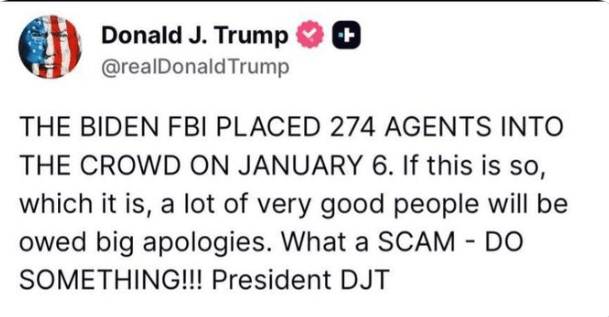
Who Was President on January 6th?
https://digbysblog.net/2026/05/23/who-was-president-on-january-6th/That's from October, btw, but circulating again. For some reason I missed it the first time and had to look up to see if it was real. It is (https://www.cnn.com/2025/11/17/politics/grocery-prices-fbi-january-6-trump).
Daniel Dale did an article on the lies this week. He has 28, I'll just excerpt a few of the worst whoppers
... Please read Digby's column for the rest. Well worth the time, again.
Two days prior to Trump's social media post, a right-wing website had published a document that said 274 FBI agents had been deployed on January 6. But the document, whose authenticity CNN hasn't verified, made clear that these agents were responding to the riot and other incidents that day (like the pipe bombs found near Republican and Democratic offices), not instigating or perpetrating the riot. And the inspector general for the Justice Department found last year that the FBI had no undercover agents at all at the Capitol on January 6, though 26 of its paid informants were in Washington that day.
Kash Patel, the Trump-appointed director of the FBI, tried to correct the record about the activities of the 274 agents on January 6. He told Fox News on the day of Trump's post: "Agents were sent into a crowd control mission after the riot was declared by Metro Police - something that goes against FBI standards." Patel reiterated on the social media platform X, "274 FBI agents were thrown into crowd control on Jan 6 against FBI standards."
Even with the "against FBI standards" claim, Patel's statements represented a clear repudiation of the president's conspiracy theory.
Trump repeats the original false claim: Nearly two months later, Trump revived the conspiracy theory about the 274 agents on Monday morning. The president re-posted the September post in which he wrongly described the actions of the agents. And in a second Monday post, Trump promoted someone else's call for Wray to be indicted and imprisoned - and he wrote, baselessly, "Wray lied!!!"
Daniel Dale did an article on the lies this week. He has 28, I'll just excerpt a few of the worst whoppers
... Please read Digby's column for the rest. Well worth the time, again.
May 23, 2026
Erik Loomis - Wonkette
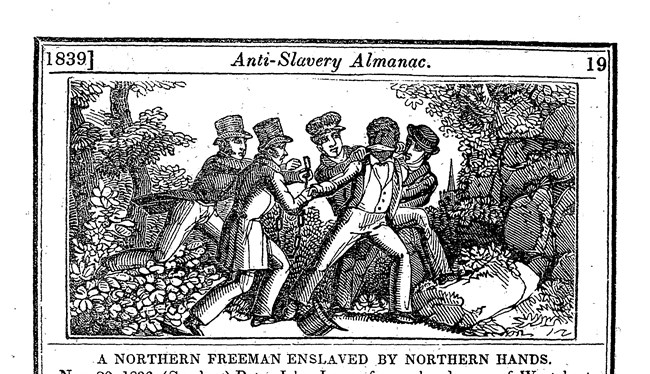
Another good history lesson to go along with Heather Cox Richardson's.
That Time This Union Officer Regretfully Declined To Send Back These Fugitive Slaves
https://www.wonkette.com/p/that-time-this-union-officer-regretfullyErik Loomis - Wonkette
Another good history lesson to go along with Heather Cox Richardson's.
On May 23, 1861, three slaves named Shepard Mallory, James Baker, and Frank Townsend fled to Fort Monroe, Virginia, to escape their master. Benjamin Butler, the Massachusetts politician turned officer in command of the fort, declared them contraband and refused to return them. This maneuver satisfied the Lincoln administration, which did want to find a way to undermine slavery but also needed to keep slave states in the Union. It also set the terms by which slave laborers themselves would play a critical role in the Civil War by taking themselves and their labor to Union lines, severely hurting the Confederate war effort.
Slaves wanted freedom from the moment they were forced from Africa. There are many slave rebellions early in American history led by slaves newly arrived from Africa, from New York to South Carolina. With the official end of the transatlantic slave trade by the US in 1807, the number of Africans entering the nation declined (though did not disappear as illegal slave trading continued), but slave rebellions still took place, such as that led by Nat Turner in 1831. Moreover, southern whites freaked out constantly over the prospect of facing a Haiti-like slave rebellion. If only.
War provided slaves opportunities to escape. During both the American Revolution and the War of 1812, slaves fled by the thousands to British lines. The British had not really expected this, even the second time, and so did not necessarily have a strategy to deal with it. Then they told the British how to attack their masters and served as guides through the swampy waterways to both burn the plantations and free their fellow slaves. The British quickly realized the effectiveness of this strategy and began promising slaves freedom to escape. These promises were followed up with half-hearted results at best, but still, it was a pathway for freedom for thousands of people.
The Civil War was a different type of conflict in these early years, largely because while southern whites, northern African-Americans, and enslaved people all knew what the war was about, northern whites were highly unsure and thus did not take on the enemy as they should have. This could lead to all sorts of issues -- think of George McClellan commanding Union forces while thinking Lincoln was just as much a threat to the future of the nation as any Confederate. It also led to a lack of clear focus on the slave labor issue. Slaves themselves changed that focus.
. . .
Slaves wanted freedom from the moment they were forced from Africa. There are many slave rebellions early in American history led by slaves newly arrived from Africa, from New York to South Carolina. With the official end of the transatlantic slave trade by the US in 1807, the number of Africans entering the nation declined (though did not disappear as illegal slave trading continued), but slave rebellions still took place, such as that led by Nat Turner in 1831. Moreover, southern whites freaked out constantly over the prospect of facing a Haiti-like slave rebellion. If only.
War provided slaves opportunities to escape. During both the American Revolution and the War of 1812, slaves fled by the thousands to British lines. The British had not really expected this, even the second time, and so did not necessarily have a strategy to deal with it. Then they told the British how to attack their masters and served as guides through the swampy waterways to both burn the plantations and free their fellow slaves. The British quickly realized the effectiveness of this strategy and began promising slaves freedom to escape. These promises were followed up with half-hearted results at best, but still, it was a pathway for freedom for thousands of people.
The Civil War was a different type of conflict in these early years, largely because while southern whites, northern African-Americans, and enslaved people all knew what the war was about, northern whites were highly unsure and thus did not take on the enemy as they should have. This could lead to all sorts of issues -- think of George McClellan commanding Union forces while thinking Lincoln was just as much a threat to the future of the nation as any Confederate. It also led to a lack of clear focus on the slave labor issue. Slaves themselves changed that focus.
. . .
May 22, 2026
Ulrika Oredsson, Lund University
Why we live alone--and what it means for the climate and our sense of community
https://phys.org/news/2026-05-climate-community.htmlUlrika Oredsson, Lund University
Solo living in your own home places a greater strain on the planet's resources than living with others, as everyone needs their own appliances--a toaster, a washing machine and so on. The Nordic countries stand out: Almost half of all households are solo-living households. Sustainability researcher Tullia Jack interviewed people who live alone about the reasons for this and hopes for new forms of co-living. The study is published in the journal Humanities and Social Sciences Communications.
. . .
"Many of the people I interviewed would prefer to live with someone else--ideally a romantic partner, but also friends or in a co-living situation. Living alone was just something that had happened," says Jack. She adds that the housing market does not make it easy for people to share living arrangements: new buildings are designed for nuclear families or single people, and it is more difficult for people who are not in a relationship to share a lease or take out a mortgage.
. . .
People who feel that, given their age, they have "outgrown" co-living have often lived with others in the past, for example while studying or for financial reasons. Many feel that the dynamics of co-living eventually becomes too demanding, or that this type of accommodation is seen as something for young people. At the same time, the sentiment was that those seeking co-living are becoming increasingly younger.
. . .
Then there were those who, for various reasons, actively sought solitude and expressed a strong need for privacy and not to be disturbed by others.
Men are more dissatisfied with solo living
Jack noticed a pattern that it was mostly men who were unhappy about living alone and saw it as stigmatizing. Among women, however--particularly older women who had been in previous relationships--there were more who were absolutely unwilling to share a home with a partner again, citing previous relationships where the division of household chores had been unequal. As one put it, "I was free when we were together, but not free enough."
. . .
. . .
"Many of the people I interviewed would prefer to live with someone else--ideally a romantic partner, but also friends or in a co-living situation. Living alone was just something that had happened," says Jack. She adds that the housing market does not make it easy for people to share living arrangements: new buildings are designed for nuclear families or single people, and it is more difficult for people who are not in a relationship to share a lease or take out a mortgage.
. . .
People who feel that, given their age, they have "outgrown" co-living have often lived with others in the past, for example while studying or for financial reasons. Many feel that the dynamics of co-living eventually becomes too demanding, or that this type of accommodation is seen as something for young people. At the same time, the sentiment was that those seeking co-living are becoming increasingly younger.
. . .
Then there were those who, for various reasons, actively sought solitude and expressed a strong need for privacy and not to be disturbed by others.
Men are more dissatisfied with solo living
Jack noticed a pattern that it was mostly men who were unhappy about living alone and saw it as stigmatizing. Among women, however--particularly older women who had been in previous relationships--there were more who were absolutely unwilling to share a home with a partner again, citing previous relationships where the division of household chores had been unequal. As one put it, "I was free when we were together, but not free enough."
. . .
May 21, 2026
The DOJ Is Lost -- Digby
https://digbysblog.net/2026/05/21/the-doj-is-lost/Ok, I admit I'm a little bit shocked to see the USAT for SDNY, on Squawk Box in the first place. Hearing him say this is unconscionable. I'm beginning to think we'll need to totally dismantle the DOJ if we expect to survive as a country.
X trackers and content blocked
Content from blocked embed:
This is shameful spin from SDNY U.S. Attorney Jay Clayton. https://t.co/hoSREOqNMA-- Kristy Greenberg (@KGreenberg_) May 21, 2026
He's actually saying that we should pay convicted criminals who beat up cops to make up for the fact that some moron leaked Trump's tax returns (along with thousands of others) when every other president for the past 40 years not only didn't think the exposure would "destroy" them, they released them voluntarily.
God help us.
X trackers and content blocked
Content from blocked embed:
"They" didn't leak Trump's tax returns. An IRS contractor did - along with thousands of other tax returns - during Trump's first term.
Biden's DOJ prosecuted the contractor, who got the max: 5 years in prison.
This is shameful spin from SDNY U.S. Attorney Jay Clayton. https://t.co/hoSREOqNMA-- Kristy Greenberg (@KGreenberg_) May 21, 2026
He's actually saying that we should pay convicted criminals who beat up cops to make up for the fact that some moron leaked Trump's tax returns (along with thousands of others) when every other president for the past 40 years not only didn't think the exposure would "destroy" them, they released them voluntarily.
God help us.
May 21, 2026
AI sycophancy + spirituality = uh oh
Deus ex machina: Half of US Christians trust AI's spiritual advice
https://www.theregister.com/ai-ml/2026/05/21/deus-ex-machina-half-of-us-christians-trust-ais-spiritual-advice/5244371AI sycophancy + spirituality = uh oh
Who needs a minister when you have an LLM? America's Christian population appears to have found God in precisely the place you'd expect a manifestation of the divine to be spotted in 2026: Amid AI chatbot responses.
A survey of Americans published this week by Evangelical polling outfit Barna sought to discover what Christians thought about AI's ability to serve as a spiritual mentor, and the split is surprisingly even: A full 48 percent of practicing US Christians told the organization that they trusted AI's advice to aid their spiritual growth.
Potentially more surprising than that, 34 percent said spiritual advice dispensed by an AI was just as trustworthy as what they'd get out of a flesh-and-blood pastor. That share rises, unsurprisingly, among younger Christians, with 39 percent of Gen Z respondents and 44 percent of Millennials agreeing that preachers and AI are at trust parity.
. . .
"Christians say they trust AI with spiritual growth, and a meaningful share say its spiritual guidance is as trustworthy as a pastor's--yet large majorities are simultaneously concerned about AI misinterpreting scripture, replacing God, or undermining the role of spiritual leaders, Barna VP of research Daniel Copeland said of the findings, which he called "confounding."
. . .
A survey of Americans published this week by Evangelical polling outfit Barna sought to discover what Christians thought about AI's ability to serve as a spiritual mentor, and the split is surprisingly even: A full 48 percent of practicing US Christians told the organization that they trusted AI's advice to aid their spiritual growth.
Potentially more surprising than that, 34 percent said spiritual advice dispensed by an AI was just as trustworthy as what they'd get out of a flesh-and-blood pastor. That share rises, unsurprisingly, among younger Christians, with 39 percent of Gen Z respondents and 44 percent of Millennials agreeing that preachers and AI are at trust parity.
. . .
"Christians say they trust AI with spiritual growth, and a meaningful share say its spiritual guidance is as trustworthy as a pastor's--yet large majorities are simultaneously concerned about AI misinterpreting scripture, replacing God, or undermining the role of spiritual leaders, Barna VP of research Daniel Copeland said of the findings, which he called "confounding."
. . .
May 21, 2026
Sean Williams
Mako Nishimura fought her way into the Japanese underworld, but drug addiction and the slow demise of organised crime gangs almost destroyed her

I enjoy these "The Long Reads" from The Guardian (I think they were in The Observer previously.) More in-depth coverage of some aspects of life that usually don't get much exposure.
'The devil's child': the rise and fall of the only female yakuza -- The Guardian - Long Read
https://www.theguardian.com/news/2026/may/21/the-devils-child-the-rise-and-fall-of-the-only-female-yakuzaSean Williams
Mako Nishimura fought her way into the Japanese underworld, but drug addiction and the slow demise of organised crime gangs almost destroyed her
I enjoy these "The Long Reads" from The Guardian (I think they were in The Observer previously.) More in-depth coverage of some aspects of life that usually don't get much exposure.
In almost 40 years, Mako Nishimura never lost a fight. She told me this as if it were as obvious as night following day. Nishimura is 5ft-nothing and slight of build. She is also probably the only woman ever to have been a full-fledged yakuza, a member of Japan's feared and rule-bound criminal underworld. She must have defeated many male gangsters. How, I asked her, did she do it? "First the legs," she said, hands clasped, maintaining the calm demeanour of a village priest. "You cut him down with a club or a plank of wood." Then you get to work.
Nishimura's relaxed attitude to violence - you suspect, speaking to her, that it's a little more than that - is what first caught the attention of yakuza members in 1986, when she was a 19-year-old runaway and former juvenile-prison inmate living in Gifu, a city near Nagoya. One night that year, Nishimura received a phone call. A pregnant friend named Aya was in trouble. Nishimura grabbed a baseball bat, ran down the street and found Aya surrounded by five men. When one of them kicked Aya in the belly, Nishimura yelled for her friend to run, then went for the attackers with her bat.
By the time the police arrived, the attackers were covered in blood and Nishimura had fled. She went into hiding 170 miles away in Tokyo. A fortnight later, when she returned to Gifu, a local man approached her in a nightclub. He was a member of the Inagawa-kai, one of Japan's largest organised crime syndicates, and he wanted her to join. Nishimura was already in a biker gang called the Worst, who raced and robbed while dressed in the white jumpsuits of wartime kamikaze pilots. She was getting more deeply involved in serious crime, too, running sex workers and extorting local businesses, as well as selling - and taking - large quantities of methamphetamines. The Inagawa-kai man didn't have the right energy, Nishimura thought. She turned him down.
Yakuza life nonetheless appealed. It offered respect, protection and, above all, the opportunity to make big money. A few days later, another yakuza sent for Nishimura. His name was Ryochi Sugino, and he ran a Gifu affiliate of one of Japan's largest yakuza groups. Sugino was a convicted murderer but he was also charismatic and, somehow, paternal. Nishimura trusted him. "He had this aura," she said.
Aged 20, she and an underboss shared sake at the gang's downtown Gifu headquarters, a ritual known as sakazuki that formalised Nishimura's entry into the yakuza, and established her loyalty to Sugino until death. Now, as the saying went, if Sugino told Nishimura a crow was white, she would have to agree. She was proud of her new identity, she told me. "Everything that was yakuza-like, I would do."
. . .
Nishimura's relaxed attitude to violence - you suspect, speaking to her, that it's a little more than that - is what first caught the attention of yakuza members in 1986, when she was a 19-year-old runaway and former juvenile-prison inmate living in Gifu, a city near Nagoya. One night that year, Nishimura received a phone call. A pregnant friend named Aya was in trouble. Nishimura grabbed a baseball bat, ran down the street and found Aya surrounded by five men. When one of them kicked Aya in the belly, Nishimura yelled for her friend to run, then went for the attackers with her bat.
By the time the police arrived, the attackers were covered in blood and Nishimura had fled. She went into hiding 170 miles away in Tokyo. A fortnight later, when she returned to Gifu, a local man approached her in a nightclub. He was a member of the Inagawa-kai, one of Japan's largest organised crime syndicates, and he wanted her to join. Nishimura was already in a biker gang called the Worst, who raced and robbed while dressed in the white jumpsuits of wartime kamikaze pilots. She was getting more deeply involved in serious crime, too, running sex workers and extorting local businesses, as well as selling - and taking - large quantities of methamphetamines. The Inagawa-kai man didn't have the right energy, Nishimura thought. She turned him down.
Yakuza life nonetheless appealed. It offered respect, protection and, above all, the opportunity to make big money. A few days later, another yakuza sent for Nishimura. His name was Ryochi Sugino, and he ran a Gifu affiliate of one of Japan's largest yakuza groups. Sugino was a convicted murderer but he was also charismatic and, somehow, paternal. Nishimura trusted him. "He had this aura," she said.
Aged 20, she and an underboss shared sake at the gang's downtown Gifu headquarters, a ritual known as sakazuki that formalised Nishimura's entry into the yakuza, and established her loyalty to Sugino until death. Now, as the saying went, if Sugino told Nishimura a crow was white, she would have to agree. She was proud of her new identity, she told me. "Everything that was yakuza-like, I would do."
. . .
May 21, 2026
Timidity does not sell
Loud And Proud -- Tom Sullivan
https://digbysblog.net/2026/05/21/loud-and-proud/Timidity does not sell
Monty Python - Marriage Guidance Counsellor https://youtu . be/6l0jFjDsCjk
There is no limit to what Republicans may do to hold onto power this year. Donald Trump's $1.776 slush fund is evidence for that. He means to fund a MAGA brown-shirt militia he can dispatch on his signal (with thin plausible deniability) to disrupt the fall elections and transfer of power, let's be clear. What else Republicans have in the works takes a criminal mind to anticipate. There is so much Trump and Trumpism in the news that it tends to crowd out most everything else, including how the left might claw back attention.
Dan Pfeiffer expects that with a spluttering economy, rising costs, the Iran war, and bipartisan outrage over Trump's slush fund and ballroom, Republicans' only campaign play is "to nuke the Democratic brand." They will replay 2024 and paint Democrats as weak and extreme.
So what might Democrats do to counterpunch? (emphasis mine):
Respond to attacks with a loud-and-proud, "Hell, yes!"
. . .
Dan Pfeiffer expects that with a spluttering economy, rising costs, the Iran war, and bipartisan outrage over Trump's slush fund and ballroom, Republicans' only campaign play is "to nuke the Democratic brand." They will replay 2024 and paint Democrats as weak and extreme.
So what might Democrats do to counterpunch? (emphasis mine):
But there's an interesting wrinkle in some recent polling worth flagging. A February analysis by Strength In Numbers found that voter perceptions of Democratic strength were a stronger predictor of vote choice than perceptions of Democratic extremism.
I'd be careful about leaning too hard on a single data point. I don't think this lets Democrats off the hook on the substantive policy questions about where the party should be positioned. But it does suggest something I've been arguing for years: how you fight matters as much as what you fight for. Voters reward candidates who project strength, fight for their constituents, and refuse to be pushed around -- regardless of where they sit on the ideological spectrum.
For a downballot candidate facing the "woke, weak, and way too liberal" assault, the takeaway isn't necessarily to soften your positions. It's to project strength about whatever your positions actually are. The voters who will decide your race want to know you'll fight for them.
Run your campaigns. Don't swerve out of your lane, but look for opportunities to blunt the attack to come.
Respond to attacks with a loud-and-proud, "Hell, yes!"
. . .
Profile Information
Gender: Do not displayHometown: Green Mountains
Home country: US
Member since: Tue Feb 5, 2013, 04:27 PM
Number of posts: 24,582